
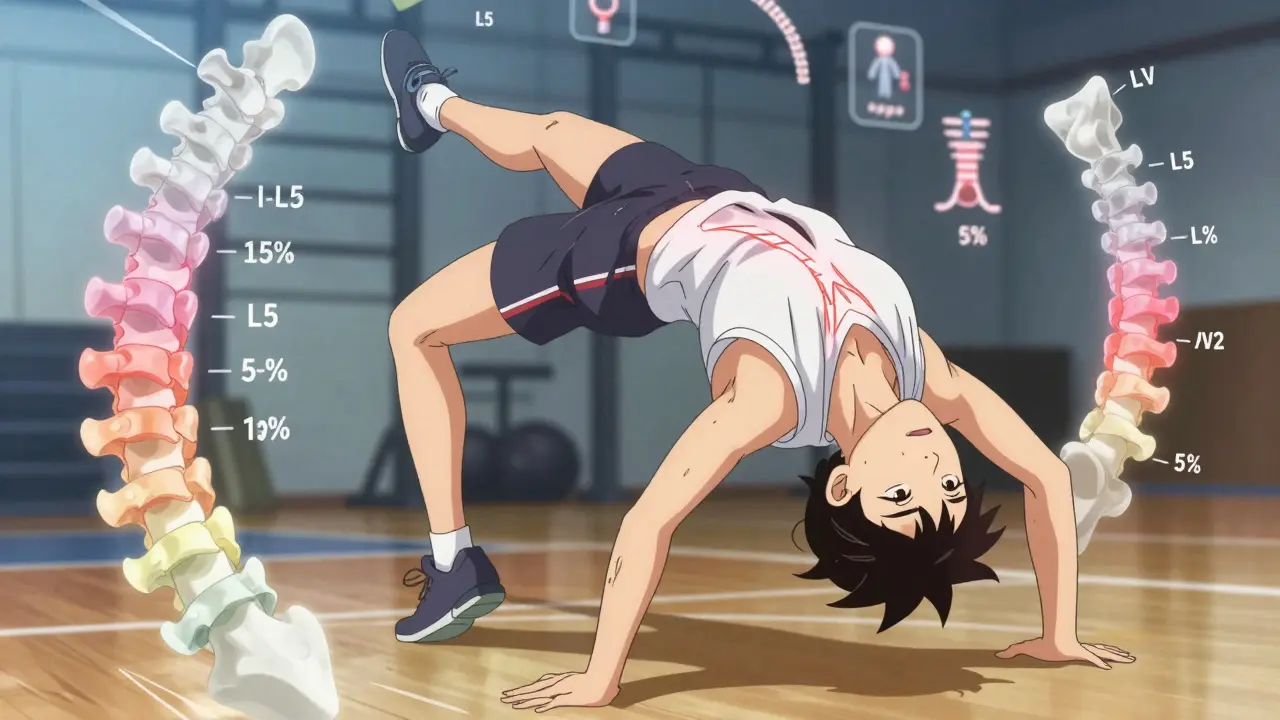
When your lower back aches after standing too long, and it feels like your spine is slipping out of place, you might be dealing with spondylolisthesis. It’s not just a muscle strain. It’s when one of your spinal bones slides forward over the one below it-most often between L5 and S1, the bottom of your low back. About 6% of people have it, but many never know because they feel nothing. For others, it’s constant pain, tight hamstrings, or even numbness shooting down the leg. The good news? You don’t always need surgery. The better news? If you do, modern fusion techniques work well for most people.
What Exactly Is Spondylolisthesis?
Spondylolisthesis comes from Greek: spondylo means vertebra, and olisthesis means slip. So it’s a slipped vertebra. Not a full dislocation-just a forward shift. Doctors grade it from I to IV based on how far it’s moved: Grade I is less than 25% slippage, Grade IV is over 75%. Most cases (about 65%) are degenerative, meaning they happen because of wear and tear on the spine as you age. Arthritis breaks down the discs and joints, letting the bone slide out of alignment. In younger people, especially athletes like gymnasts or football players, it’s often isthmic-caused by a tiny stress fracture in a part of the bone called the pars interarticularis. That fracture can develop over time from repeated back extension, like arching your spine during a backbend or heavy lift.Why Do Some People Feel Pain and Others Don’t?
About half of people with spondylolisthesis never have symptoms. Their spine just shifted a little, and their body adapted. But if the slip presses on nerves or changes how your spine moves, pain follows. The most common complaint? Lower back pain that feels deep and dull, like a constant ache. It gets worse when you stand or walk, and eases when you sit or bend forward. That’s because bending forward opens up the space around the nerves. About 70% of symptomatic people have tight hamstrings-your body’s way of trying to protect the spine by limiting movement. You might also feel stiffness, struggle to walk long distances, or notice your posture changing. In advanced cases, you might develop swayback (increased lordosis), and later, even a rounded upper back (kyphosis) as the spine tries to balance.When Nerves Start to Act Up
If the slip is more than 50% (Grade III or IV), nerve compression becomes likely. About 35% of people with severe slips experience tingling, numbness, or weakness in one or both legs. This isn’t just back pain-it’s sciatica. The nerve roots that run down your legs get pinched. Some people develop neurogenic claudication: cramping or heaviness in the legs when walking, forcing them to stop and rest. It feels like your legs are giving out. Studies show people with high-grade slips are nearly three times more likely to have this than those with mild slips. If you’re over 50 and suddenly can’t walk more than a few blocks without stopping, this could be why.How Doctors Diagnose It
It starts with a simple standing X-ray. That’s the gold standard-it shows exactly how far the vertebra has slipped. A CT scan gives a detailed 3D view of the bones, revealing fractures or bone spurs. An MRI is used when nerves are involved-it shows swelling, disc herniation, or compression of the spinal cord or nerve roots. You won’t need all three. Most doctors start with X-rays, then add MRI if pain radiates down the leg or if weakness shows up. Don’t be surprised if your doctor asks about your sports history, your job, or whether you’ve had back pain since childhood. Genetics play a role too-about 26% of kids with spondylolisthesis have a family member with it.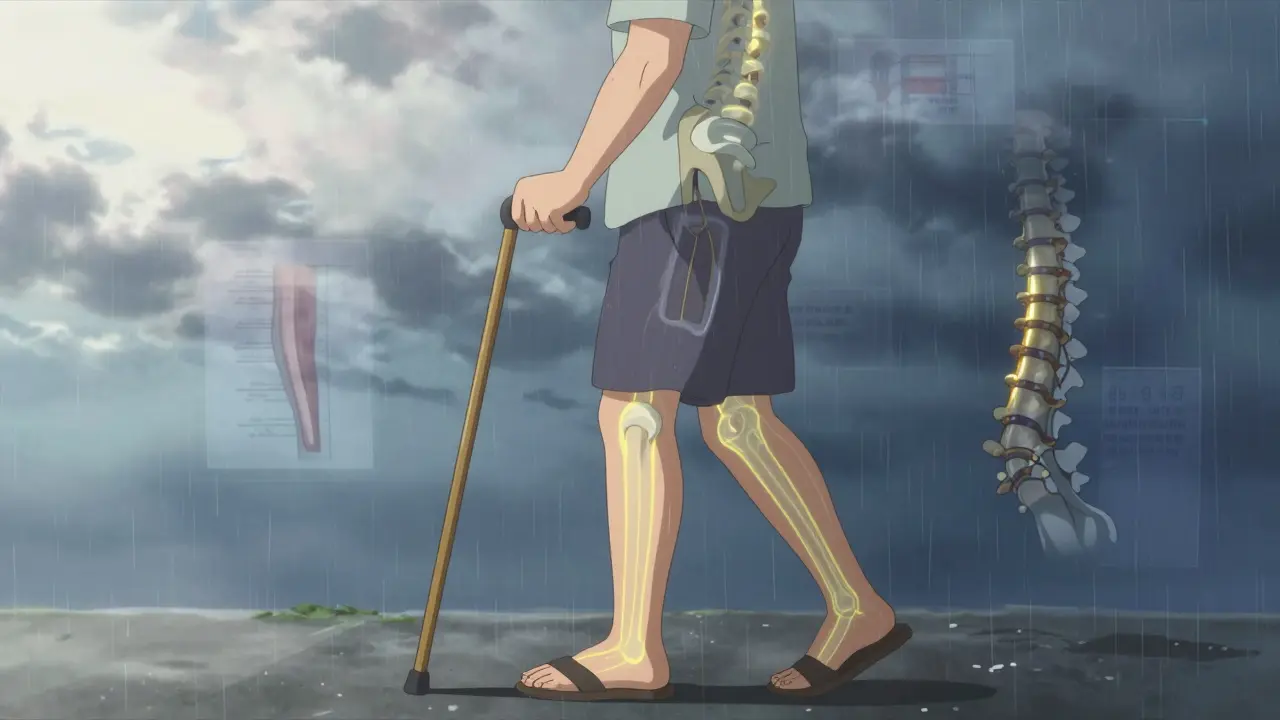
Conservative Treatment: What Actually Works
Before you even think about surgery, try at least 6 to 12 months of non-surgical care. Most people get better without it. The core of treatment? Physical therapy. Not just stretching. You need to strengthen your core-abs, obliques, and lower back muscles-to stabilize the spine. A 2023 study found that patients who stuck with a 12-week core program improved pain and function significantly. Hamstring stretches are non-negotiable-if those muscles are tight, they pull on your pelvis and make the slip worse. NSAIDs like ibuprofen help with inflammation, but they don’t fix the root problem. Epidural steroid injections can give temporary relief if nerve pain is sharp and burning, but they’re not a long-term fix. Only about 65% of people stick with PT long enough to see results. If you’re serious about avoiding surgery, commit to the full program.When Surgery Becomes Necessary
Surgery isn’t for everyone. It’s for people whose pain hasn’t improved after 6-12 months of conservative care, and whose daily life is ruined-can’t work, can’t sleep, can’t walk without stopping. If you have nerve damage-numbness, foot drop, loss of bladder control-that’s an emergency. But for most, it’s about quality of life. The goal isn’t to make the spine perfectly straight. It’s to stop the slipping, take pressure off the nerves, and let you move without pain.The Three Main Types of Spinal Fusion
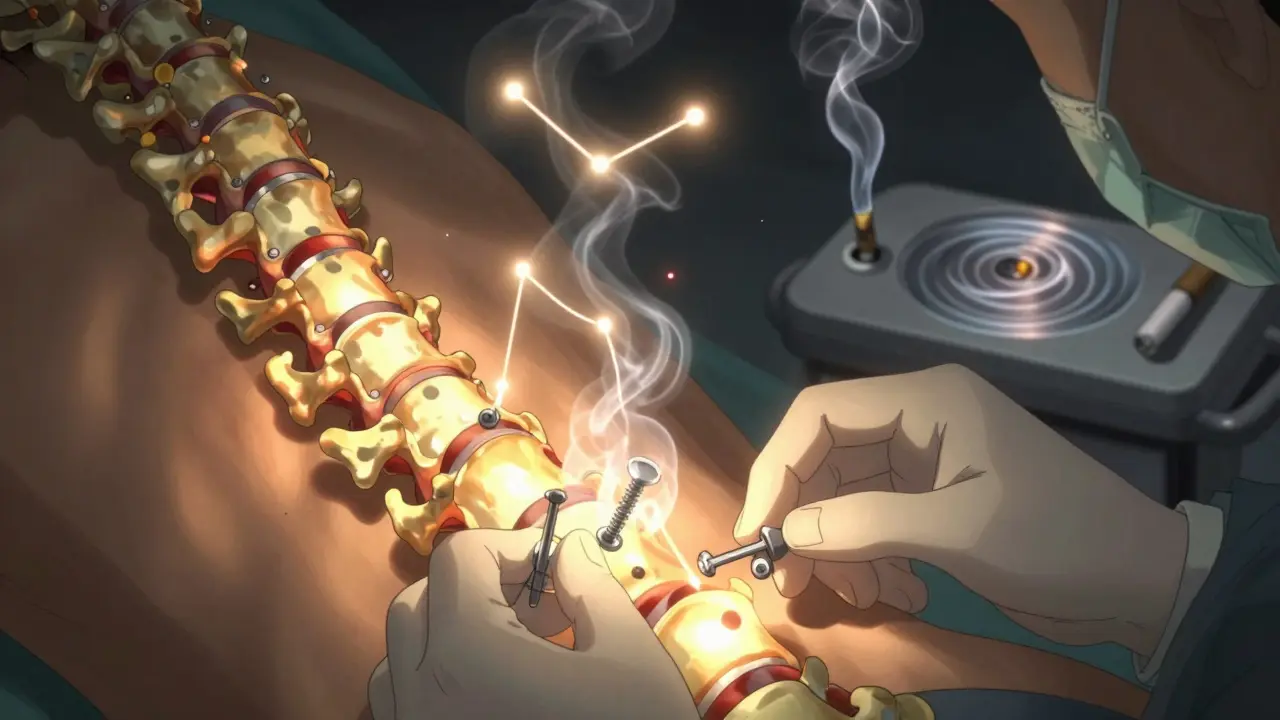
There are three main ways to fuse the spine:- Posterolateral fusion (PLF): This is the oldest method. Surgeons place bone grafts along the back of the spine and use screws and rods to hold it in place. It works well for mild slips (Grade I-II), with success rates of 75-85%. But for severe slips, it’s less reliable-only 60-70% fusion success.
- Interbody fusion (PLIF/TLIF): This is now the preferred method for most cases. The surgeon removes the damaged disc and inserts a spacer filled with bone graft between the vertebrae. This restores disc height, opens up the nerve space, and gives the spine better alignment. Success rates? 85-92% across all grades. It’s more complex, but it works better, especially for Grade III-IV slips.
- Minimally invasive fusion: Smaller incisions, less muscle damage. Recovery is faster, but it’s not for everyone. Only about 10% of fusions are done this way. It’s best for healthy, non-obese patients with mild to moderate slips.
What Happens After Surgery?
Recovery isn’t quick. You’ll be restricted from bending, twisting, or lifting heavy things for 6-8 weeks. Physical therapy starts around week 4, focusing on gentle movement and core activation. Full healing takes 12-18 months. Bone doesn’t fuse overnight. You’ll have follow-up X-rays at 3, 6, and 12 months to check progress. Smoking kills fusion rates-smokers are 3.2 times more likely to develop pseudoarthrosis (a false joint where the bone doesn’t heal). If your BMI is over 30, your risk of complications jumps 47%. Losing weight before surgery isn’t optional-it’s essential.What About Newer Options?
In 2022, the FDA approved two new interbody devices designed specifically for spondylolisthesis. Early results show 89% fusion rates at 6 months, compared to 82% with older models. Bone morphogenetic protein (BMP) is being used in high-risk cases-it boosts bone growth and pushes fusion rates to 94% in patients who might otherwise fail. Stem cell therapies are still experimental but promising. Then there’s motion preservation-devices that stabilize the spine without fusing it. They’re great for Grade I-II slips and younger patients. But long-term data is limited. After five years, 76% of people with these devices are doing well, compared to 88% with fusion. They’re not a replacement yet, but they’re an option worth discussing if you’re young and want to keep some movement.The Bigger Picture: Why Fusion Isn’t Always the Answer
A 2023 study found that disc degeneration-how worn out the cushion between your vertebrae is-correlates more strongly with age than with the degree of slippage. That means two people with the same slip percentage can have very different pain levels. One might have a mild slip but a destroyed disc. The other might have a big slip but healthy discs. Treatment should focus on symptoms, not just the X-ray. If your pain is manageable, and your nerves are fine, you might not need fusion at all. Surgery has risks. About 12-15% of people with severe slips need a second surgery within five years because the levels above or below the fusion start to break down-this is called adjacent segment disease. It happens in 18-22% of fusion patients. That’s why choosing the right candidate is so important.What to Ask Your Doctor
If you’re considering fusion, ask:- What grade is my slip, and how much nerve compression do I have?
- Have I tried enough conservative care? Did I stick with PT for the full 12 weeks?
- What’s the success rate of the fusion type you’re recommending for my grade?
- Am I a good candidate for minimally invasive surgery?
- What’s my risk of needing another surgery in five years?
- Do I need to lose weight or quit smoking before surgery?
There’s no rush. Spondylolisthesis doesn’t suddenly kill you. But it can steal your life if you ignore it. The best outcomes come from smart choices-physical therapy first, surgery only when needed, and a clear plan with your doctor.
Can spondylolisthesis get worse over time?
Yes, especially if you’re active, overweight, or have degenerative arthritis. The slip can progress slowly over years, particularly in people over 50. High-grade slips (Grade III-IV) are more likely to worsen, especially if the disc between the vertebrae is severely worn. Regular imaging and monitoring are key if you’re not having surgery.
Is walking good for spondylolisthesis?
Yes, but with limits. Walking is low-impact and helps maintain mobility, but if you have neurogenic claudication, you may need to stop and rest every few minutes. Use a cane or walker if needed. Avoid long walks on uneven ground or uphill. A stationary bike with an upright posture is often better than walking for people with nerve compression.
Can I still play sports with spondylolisthesis?
It depends on the grade and symptoms. High-risk sports like gymnastics, weightlifting, or football are usually discouraged, especially if you have a recent slip or nerve symptoms. Low-impact activities like swimming, cycling, or yoga (with modifications) are safer. Always get clearance from your doctor or physical therapist before returning to sports.
Does spondylolisthesis always require surgery?
No. In fact, most people never need surgery. About 80% of cases improve with physical therapy, activity changes, and pain management. Surgery is only considered if conservative treatments fail after 6-12 months and pain severely limits daily life.
How long does spinal fusion last?
A successful fusion is permanent. Once the bone grows together, it becomes one solid piece. But the surrounding areas can wear out over time-this is called adjacent segment disease. That’s why 18-22% of patients need another surgery within five years. The fusion itself lasts a lifetime, but the spine around it may need attention later.
What’s the difference between PLIF and TLIF?
Both are types of interbody fusion. PLIF (posterior lumbar interbody fusion) accesses the spine from the back and works on both sides of the disc. TLIF (transforaminal lumbar interbody fusion) accesses from one side only, through the neural foramen. TLIF is more common today because it causes less muscle disruption and has slightly lower complication rates, especially in patients with previous surgery or scarring.




Bennett Ryynanen
January 1, 2026 AT 11:26 AMThis post is fire. I had Grade II spondylolisthesis after lifting wrong in college and thought I was done for. PT saved my life - core work, hamstring stretches, and ditching my damn squat rack. No surgery. Still ride bikes, still hike. Don't let fear sell you a scalpel.
Deepika D
January 2, 2026 AT 18:03 PMAs someone who’s been teaching yoga to spine patients for over 15 years, I can’t stress enough how much posture and pelvic alignment matter here. Most people think it’s just about strengthening the back, but it’s the hips and diaphragm that hold the whole chain together. I’ve seen people with Grade III slips walk pain-free after 8 months of breathwork + slow pelvic tilts + avoiding forward folds. The body adapts if you give it the right cues. Also - stop stretching hamstrings aggressively. You’re not trying to touch your toes, you’re trying to stop pulling your pelvis into anterior tilt. Gentle, sustained, and mindful. And yes, I’ve had patients over 70 reverse their symptoms without fusion. It’s not magic. It’s biomechanics.
Chandreson Chandreas
January 4, 2026 AT 13:08 PMlife’s weird right? 😅 I know a guy who’s got Grade IV, works as a construction foreman, never had surgery, and still lifts 50lb bags of cement. Meanwhile, my cousin with Grade I is on disability because she ‘can’t sit through a movie.’ Pain’s not in the X-ray, it’s in the story we tell ourselves. Sometimes the slip’s just a label. The real issue? Fear. And caffeine. And not sleeping. Try fixing those first. 🤔
anggit marga
January 5, 2026 AT 07:22 AMWhy is everyone so obsessed with American medical solutions? In Nigeria we just use traditional herbs, massage, and prayer. No fusion. No MRI. No expensive PT. People live full lives. You don’t need Western tech to fix what God made. This post feels like corporate spine propaganda
Joy Nickles
January 6, 2026 AT 13:47 PMOkay but like… I had this and I did ALL the PT… and then I found out I was just dehydrated?? Like?? My nerves were firing weird because I drank 2 cups of water a day?? And then I started drinking 3L and my sciatica just… vanished?? Like?? I didn’t even tell my doctor?? I just felt like a genius?? And now I’m like… is this all just… water?? I’m not mad?? I’m just… confused?? 😵💫💧
Emma Hooper
January 6, 2026 AT 14:45 PMLet’s be real - fusion isn’t a cure, it’s a trade. You swap mobility for stability, and half the time you just shift the pain up or down the chain. I’ve seen too many people walk out of surgery thinking they’re fixed, then two years later they’re back in PT with a new ‘adjacent segment’ drama. Your spine isn’t a car part you replace. It’s a living, breathing, screaming mess of nerves and collagen. Treat it like a garden, not a machine. And if your doc pushes BMP like it’s a miracle drug… run. It’s not. It’s expensive, inflames tissue, and sometimes makes bone grow… everywhere. Like in your esophagus. True story.
Darren Pearson
January 6, 2026 AT 17:21 PMWhile the article presents a reasonably comprehensive overview of spondylolisthesis management, it lacks critical engagement with the longitudinal outcomes data from the North American Spine Society’s 2022 registry, which demonstrates a 22.7% reoperation rate within five years for TLIF procedures in patients over 65. Furthermore, the uncritical endorsement of minimally invasive techniques neglects the significant learning curve and selection bias inherent in contemporary surgical literature. A more rigorous analysis would contextualize these interventions within evidence-based guidelines rather than anecdotal success rates.
Urvi Patel
January 8, 2026 AT 12:19 PMWhy do we even need surgery at all? I mean look at the stats - 80% improve without it. So why are hospitals pushing fusion like it’s the only option? Because it’s profitable. You think they care about your back? They care about your insurance. PT costs $50 a session. Fusion costs $80K. Pick your poison. I’m not saying don’t get it done. I’m saying ask why you’re being pushed there. And stop listening to doctors who’ve never done a single rep of a plank
Martin Viau
January 9, 2026 AT 23:54 PMFrom a biomechanical standpoint, the assertion that degenerative disc height correlates more strongly with symptomatology than slippage grade is empirically supported by the 2023 meta-analysis by Lee et al. (J Neurosurg Spine, 38:112–125). However, the conflation of radiographic severity with clinical relevance remains a persistent epistemological flaw in orthopedic discourse. The operative intervention threshold should be predicated on functional capacity indices (e.g., Oswestry Disability Index) rather than radiographic classification alone. The overreliance on MRI for nerve compression assessment also introduces significant false-positive bias due to age-related degenerative changes in asymptomatic populations.
Marilyn Ferrera
January 11, 2026 AT 23:45 PMDon’t rush. PT first. Always. Even if it feels slow. Your body knows how to heal - if you stop fighting it.
Robb Rice
January 13, 2026 AT 19:44 PMI’m 58 and had a Grade II slip diagnosed 8 years ago. Did PT for 14 months. Swore off deadlifts. Started swimming. Lost 30 lbs. No surgery. Can walk 5 miles now. I didn’t ‘beat’ it - I learned to live with it. The key? Patience. And quitting smoking. That one thing alone doubled my fusion odds if I’d gone that route. Don’t underestimate the little stuff.
Harriet Hollingsworth
January 13, 2026 AT 21:24 PMPeople treat this like it’s just a back problem. But it’s a moral failure. You let yourself get weak. You didn’t stretch. You ate junk. You sat too long. Now you want a scalpel to fix your laziness? Surgery isn’t the answer - accountability is. Stop blaming your spine. Start blaming your choices.