

Imagine a life-saving medication costing hundreds of dollars per month. Now imagine the same medicine available for pennies, just a few years later. That shift doesn't happen by accident. It often starts with a specific legal move called a Paragraph IV certification. This certification is a formal statement submitted by generic drug manufacturers when they apply to sell a copy of a brand-name drug.
Most people assume patent laws exist only to protect inventors. But in the pharmaceutical world, the system is designed to balance that protection with public access. Without mechanisms like this one, patients might wait decades for cheaper versions of medicines they desperately need. By the time you finish reading this, you'll understand exactly how these legal filings work, why they trigger lawsuits, and how the game of chess between big pharma and generic companies plays out in court.
The Legal Backbone: Hatch-Waxman Act Basics
To understand Paragraph IV, you first need to know the house it lives in. In 1984, the U.S. government signed the Drug Price Competition and Patent Term Restoration Act, widely known as the Hatch-Waxman Act. This federal law created a pathway for generic drugs to enter the market while maintaining incentives for innovation. Before this act, companies had to prove a drug was safe from scratch. Afterward, they could rely on the original manufacturer's data.
This law did two critical things. First, it shortened the regulatory burden for generics. Second, it gave brand companies a temporary monopoly to recoup their investment before competitors arrived. However, this monopoly is not infinite. The law recognized that some patents claimed by drugmakers were shaky or invalid. Paragraph IV certification became the tool to test those patents early, rather than waiting until the generic hits store shelves.
Think of it like a warning shot. Instead of launching a product and getting sued immediately, the generic company files a paper saying, "We think your patent is weak." If the brand name company disagrees, they can sue. If they don't sue, the clock ticks faster toward generic approval. It forces the issue into the open years earlier than traditional patent law would allow.
How the Certification Process Unfolds
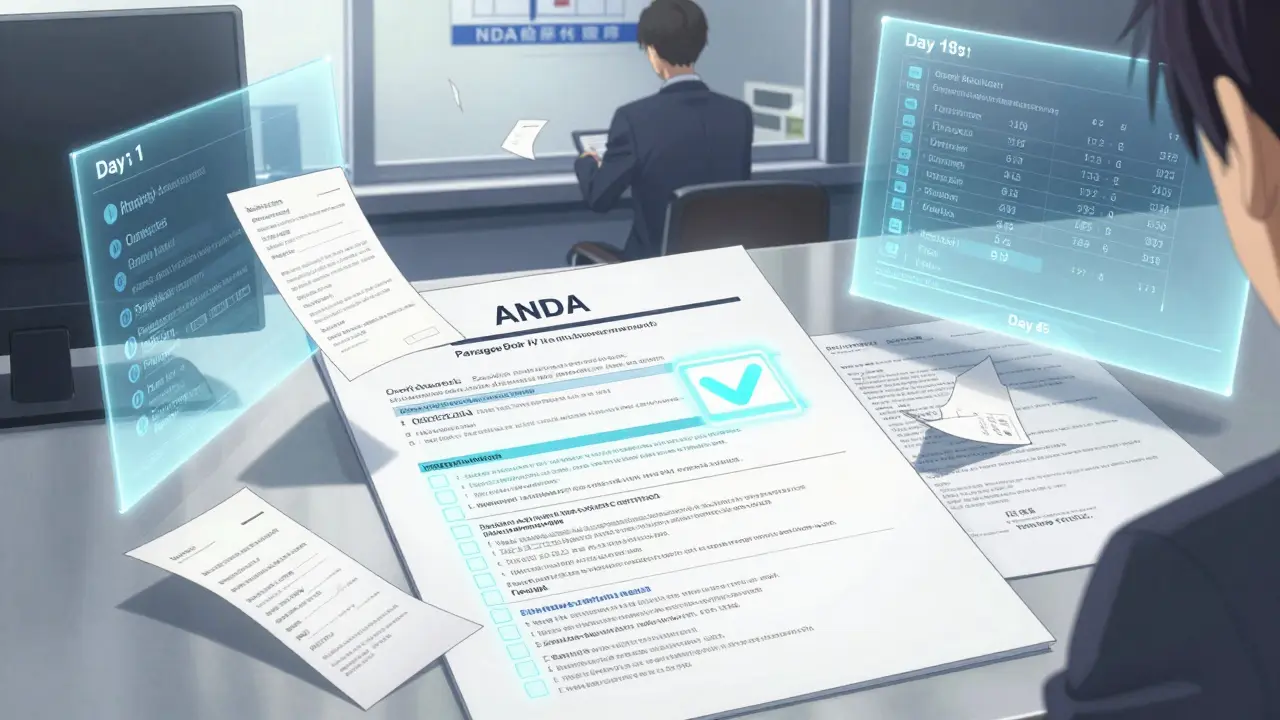
The process begins with an Abbreviated New Drug Application, or ANDA. This document tells the Food and Drug Administration (FDA) that the new drug is bioequivalent to the branded version. When a generic firm submits this form, they must make a specific certification regarding every patent listed in the FDA's Orange Book. The official publication listing approved drug products and associated patents. There are four types of certifications available. The first three are basically "yes, we respect these patents." They promise to wait until the patent expires.
The fourth option is the famous Paragraph IV. Here, the applicant checks a box stating that a specific patent is invalid, unenforceable, or won't be infringed upon. That checkmark is huge. It sends a notification letter directly to the brand owner, who then has exactly 45 days to respond. If they file a lawsuit within that window, the FDA freezes the approval process for up to 30 months.
Here is how the timeline typically breaks down during a challenge:
- Day 0: Generic company files ANDA with Paragraph IV certification.
- Day 1-20: Generic sends notice letter to the NDA holder and patent owner.
- Day 21-45: Brand company decides whether to file a patent infringement suit.
- Upon Filing: FDA automatically places a 30-month stay on approval.
- After Resolution: Case ends, FDA resumes review if stay expired.
The Stakes: 180 Days of Money
Why take the risk? Suing a giant pharmaceutical corporation costs millions. Yet, companies do it constantly because of the prize. The first generic company to successfully file a Paragraph IV certification gets something rare in the industry: 180 days of market exclusivity.
During this six-month period, no other generic competitor can sell the drug. Even the FDA cannot approve another application. The first mover captures nearly the entire generic market share. With blockbuster drugs generating billions annually, that window can mean massive profits. Data suggests that for high-revenue drugs, that exclusivity period alone can yield hundreds of millions in pure profit.
This creates a race condition. Multiple firms often target the same drug. Sometimes you see five different companies trying to be the first to challenge a patent. The first one to win the case (or settle favorably) gets the cash; the rest are stuck waiting.
Strategic Battles: Thickets and Settlements
Because the stakes are so high, brand companies have gotten very good at fighting back. A major tactic involves creating patent thickets. Instead of having one strong patent covering the molecule, the brand might list dozens of patents covering everything from crystal forms to manufacturing methods.
A study analyzing data through 2025 found that the average number of patents per drug increased significantly over the last two decades. In the early 2000s, drugs averaged around seven patents. By recent reports, that number has jumped to over 17. Each of these patents requires the generic company to spend time and money challenging them under Paragraph IV.
This often leads to settlements, sometimes controversial ones. The generic company agrees to delay entry, and the brand pays a settlement fee. These arrangements, often called "pay-for-delay," are watched closely by the Federal Trade Commission. While they resolve litigation quickly, critics argue they hurt consumers by keeping prices high longer than necessary.
Comparing the Players' Motivations
| Factor | Brand Manufacturer | Generic Manufacturer |
|---|---|---|
| Primary Goal | Maintain market exclusivity | Accelerate market entry |
| Tactic | File infringement suits (45-day rule) | Certify invalidity (Paragraph IV) |
| Risk Exposure | Loss of monopoly revenue | $12 million+ legal fees per case |
| Win Condition | Patent upheld; launch delayed | Patent invalidated; launch allowed |
Notice how different the goals are. The brand wants to buy time. They prefer delays. A 30-month stay is a gift to their bottom line. The generic company wants speed. Every day spent in court costs them potential revenue. This tug-of-war defines the modern pharmaceutical marketplace. It explains why many drug launches are tied to specific court dates rather than clinical trial results.

Recent Shifts in the Landscape
The rules haven't stayed static forever. In October 2022, the FDA updated regulations regarding certification amendments. Previously, loopholes existed where applicants could modify their application in ways that complicated the patent clock. The new rules tightened the documentation required for changes in strength or formulation.
We also see changing success rates. Historically, brand owners won most patent cases. However, data from 2020 through 2025 shows generics winning closer to 60% of challenges. Supreme Court decisions narrowing what qualifies for patent eligibility have made it easier for challengers to succeed. This trend puts more pressure on brands to settle quickly rather than litigate to a loss.
Looking ahead to late 2026, there are proposals to force brands to justify every patent they list in the Orange Book. If enacted, this could dramatically reduce the volume of patent thickets. Right now, however, the burden of proof sits heavily on the generic challenger to prove a patent is invalid.
Frequently Asked Questions
What is the main difference between Paragraph III and Paragraph IV certifications?
Paragraph III certifies that the generic product will wait until a specific patent expires to enter the market. Paragraph IV asserts the patent is invalid or will not be infringed, which triggers the possibility of immediate litigation and a potential 180-day exclusivity reward.
Can a brand stop a generic launch after filing a lawsuit?
Yes. If a brand files a suit within 45 days of receiving notice, the FDA imposes an automatic 30-month stay on approval. Approval cannot proceed until the litigation resolves or the stay expires.
Is the 30-month stay guaranteed to last that long?
No. The stay lasts only if the lawsuit proceeds to judgment. If the parties settle quickly or the court makes a ruling sooner, the stay ends immediately. Delays due to procedural issues can extend it slightly beyond 30 months in practice.
What happens if multiple companies file Paragraph IV challenges?
Only the first applicant to file a complete ANDA receives the 180-day market exclusivity. Subsequent filers still benefit from the generic price reduction but face competition during the exclusive window.
Does Paragraph IV litigation always result in lower drug prices?
Generally yes. Once a generic enters the market via this route, prices drop significantly compared to the brand. However, pay-for-delay settlements can sometimes postpone this effect, keeping prices high for extra months or years.







Sam Hayes
April 3, 2026 AT 01:14 AMso basically when a generic files that paper they are telling the FDA they think the patent is garbage. most people dont realize how fast the clock starts ticking after that notification letter goes out. the brand company has exactly forty five days to decide if they want to sue or let the generics slide in. if they sue the whole process pauses for up to thirty months which helps the big pharma companies keep their profits going longer than planned. its wild how much money rides on just filling out a form correctly and hoping the courts see your side. i wish more patients understood how this game works because it affects what drugs end up being affordable for real families
Vicki Marinker
April 4, 2026 AT 17:24 PMThis optimistic outlook ignores the reality that most settlements still involve pay-for-delay agreements.
Joey Petelle
April 5, 2026 AT 07:01 AMOh fantastic another intricate legal dance designed to keep us hooked on high prices while lawyers feast on the scraps left behind. You call it innovation protection I call it a toll booth for corporate welfare dressed in bureaucratic clothing. They talk about public access like it matters when the stock portfolio is the only thing actually breathing. The average person would need a law degree and a small army of paralegals to navigate this mess without losing their mind. Honestly the system works perfectly fine for the shareholders but leaves the actual consumers holding the bag and paying through the nose. Its a masterpiece of capitalism gone wrong wrapped in red tape.
Lawrence Rimmer
April 6, 2026 AT 03:07 AMYou focus too heavily on the monetization aspect without considering the necessary incentive structure for genuine discovery. Without financial rewards why would anyone invest billions into research that might fail before ever hitting the market. It is a delicate balance between greed and necessity that often gets lost in the noise of political rhetoric. The system is flawed yes but removing the carrot entirely might starve the horse before we even reach the finish line. We need reform not destruction of the entire framework.
angel sharma
April 7, 2026 AT 12:22 PMWe absolutely need to celebrate the transparency brought about by these certification mechanisms because they represent a vital step toward healthcare equity for everyone. It is empowering to know that smaller companies can challenge the giants instead of just waiting patiently for decades to pass by. Every single day that a patent gets challenged is a day closer to saving lives through accessible medicine for those who need it most. The energy required to file these applications shows incredible determination from firms who understand the power of competition in driving prices down. People often forget that this legal tool exists specifically to prevent monopolies from running unchecked across the pharmaceutical landscape forever. When you look at the data regarding success rates shifting toward generic wins it gives us hope that justice is slowly finding its footing in the courtroom. We must remain vigilant about settlement deals though because they can undo all the progress made during the litigation phase itself. Transparency in the Orange Book listings could revolutionize how we trust the information presented during these high stakes battles. Education plays a huge role in helping the public understand why drug prices fluctuate based on these court dates. If more stakeholders were informed about the timeline implications we might see fewer delays caused by confusion rather than malice. The momentum built since the Hatch-Waxman act continues to shape modern healthcare delivery in ways that matter deeply to families worldwide. We should encourage policy changes that reduce the ability to abuse patent thickets as a shield against legitimate competition. Innovation requires checks and balances to ensure it serves humanity rather than just inflating quarterly earnings reports. The story of paragraph four certifications is far from finished and depends on our collective advocacy to keep the pressure on regulators. Stay positive about the future because every legal victory translates into real money saved for someone needing insulin or heart medication today. Together we can push for reforms that prioritize patient health above corporate profit margins without destroying the incentive for new drugs entirely. Keep fighting for the right to afford life saving treatments regardless of the complex legal jargon used by lobbyists.
HARSH GUSANI
April 9, 2026 AT 05:55 AMI agree with you about keeping prices low because that is the right thing to do 🙏. Big companies always try to trick people into paying more than they need 💸. We need to stop them from using tricks like patent thickets 😤. The government should watch them closer 👀. Everyone deserves cheap medicine if they are sick 🤕. Do not let them win easily 🚫.
Sakshi Mahant
April 9, 2026 AT 10:00 AMWhile this discussion focuses heavily on United States regulations it is worth noting similar dynamics occur globally. Different countries manage patent challenges through varying mechanisms but the core conflict remains the same everywhere. Balance is key to ensuring inventors are rewarded while patients receive timely care. Many developing nations struggle with these costs even more than wealthy economies do. Understanding these nuances helps foster better international cooperation on health policies eventually.
Beth LeCours
April 9, 2026 AT 15:41 PMThe explanation about patent thickets makes sense but feels complicated to follow.
Joseph Rutakangwa
April 9, 2026 AT 19:43 PMfocus on the outcome not the process patients need relief now legalities matter less than availability keep pushing for change