
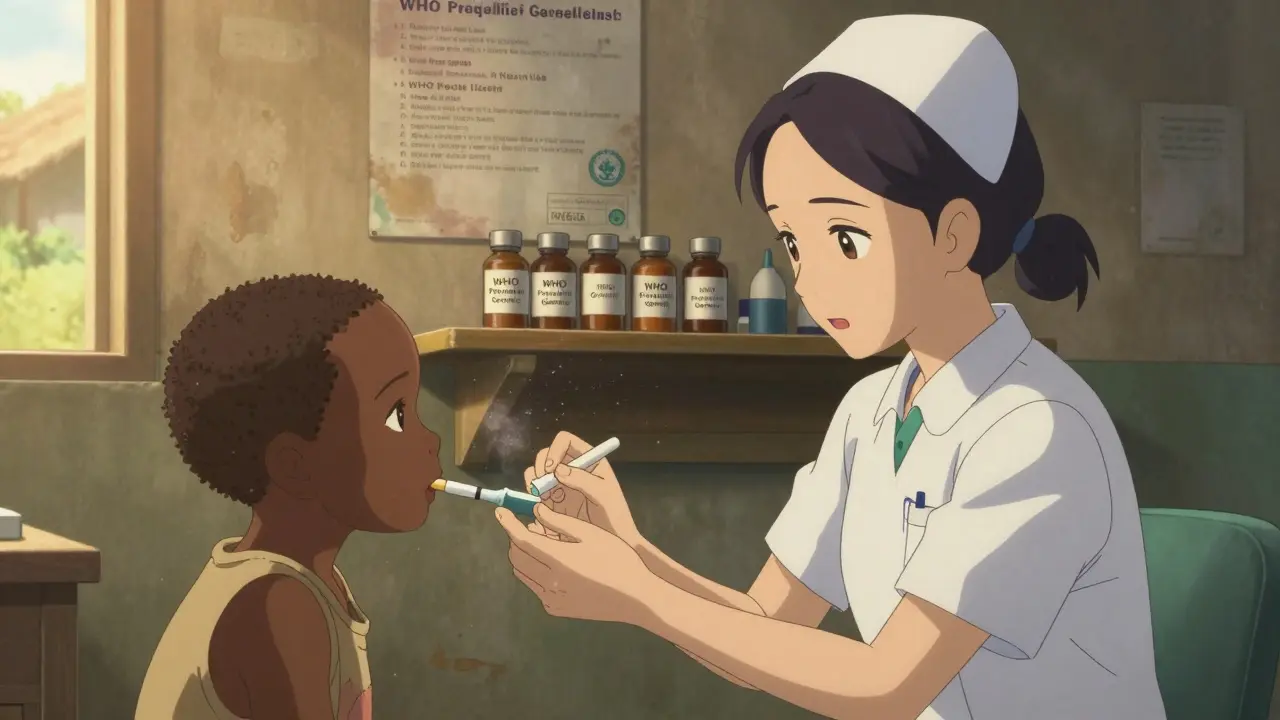
The WHO Model List of Essential Medicines isn’t just a document-it’s the backbone of medicine access for over 150 countries. Every year, millions of people in low- and middle-income nations rely on it to get life-saving treatments for infections, chronic diseases, and emergencies. But what exactly is this list, and why does it matter so much for generic drugs? The answer lies in how it cuts through the noise of global pharmaceutical markets to focus on what actually works, what’s affordable, and what’s needed most.
What the WHO Model List Actually Does
The World Health Organization first published the Model List in 1977. Since then, it’s been updated every two years. The 2023 version includes 591 medicines covering 369 conditions. What makes it different from a hospital formulary or insurance plan is its single goal: to identify the medicines that every health system, no matter how poor or remote, should have on hand. It doesn’t care about profit margins, marketing campaigns, or patent extensions. It cares about survival.
The list splits medicines into two groups: the core list and the complementary list. The core list includes the most basic, life-saving drugs-things like antibiotics for pneumonia, insulin for diabetes, or antiretrovirals for HIV. These are chosen because they’re safe, effective, and cheap enough for clinics without labs or specialists. The complementary list adds medicines that need more support-like cancer drugs that require imaging or monitoring, or newer treatments that need trained staff. Even here, the rule is simple: if it doesn’t save lives at scale, it doesn’t make the cut.
Why Generics Are the Heart of the List
Almost half of the medicines on the 2023 list are generics. That’s not an accident. The WHO doesn’t just tolerate generics-it pushes them. Why? Because generics make treatment possible. A brand-name HIV drug might cost $1,000 a year. The generic version? $119. That’s an 89% drop in price. That’s the difference between a child getting treatment and a child dying.
The list doesn’t just say “use generics.” It demands quality. Every generic on the list must meet WHO Prequalification standards-or be approved by a strict regulator like the FDA or EMA. That means independent labs test the drug to prove it works the same way as the original. For most drugs, the active ingredient must be within 80-125% of the reference product’s absorption. For narrow-therapeutic-index drugs like warfarin or lithium, the range tightens to 90-111%. No guesswork. No corner-cutting.
And it works. Countries that fully adopt the WHO list see 23-37% lower pharmaceutical spending. In Ghana, out-of-pocket costs for medicines dropped 29% after aligning with the list. In India, hospitals cut antimicrobial costs by 35% by switching to WHO-recommended generic antibiotics. These aren’t theoretical gains. They’re real savings that let clinics treat more patients.
How Medicines Make the List
Getting on the WHO Model List isn’t easy. It’s not a popularity contest. Each application goes through a rigorous review by 25 independent experts from 18 countries. They score each medicine on four areas:
- Public health relevance (30%)-How many people does this disease affect? A medicine for a disease with fewer than 100 cases per 100,000 people rarely qualifies.
- Efficacy and safety (30%)-The evidence must come from high-quality clinical trials (Level 1a or 1b). No anecdotes. No small studies.
- Cost-effectiveness (25%)-Does this drug give good value? The WHO uses a simple rule: if it costs more than three times a country’s GDP per capita per quality-adjusted life year gained, it’s unlikely to be included.
- Programmatic feasibility (15%)-Can this medicine actually be delivered? Can it be stored without refrigeration? Can community health workers give it? Can it be made in bulk?
A medicine needs at least a 7 out of 10 in each category and an overall score of 7.5 to make the list. In 2023, only 217 applications were reviewed. About half were rejected. The process is transparent, slow, and science-driven. No lobbying. No corporate influence. At least, that’s the goal.
Where the System Struggles
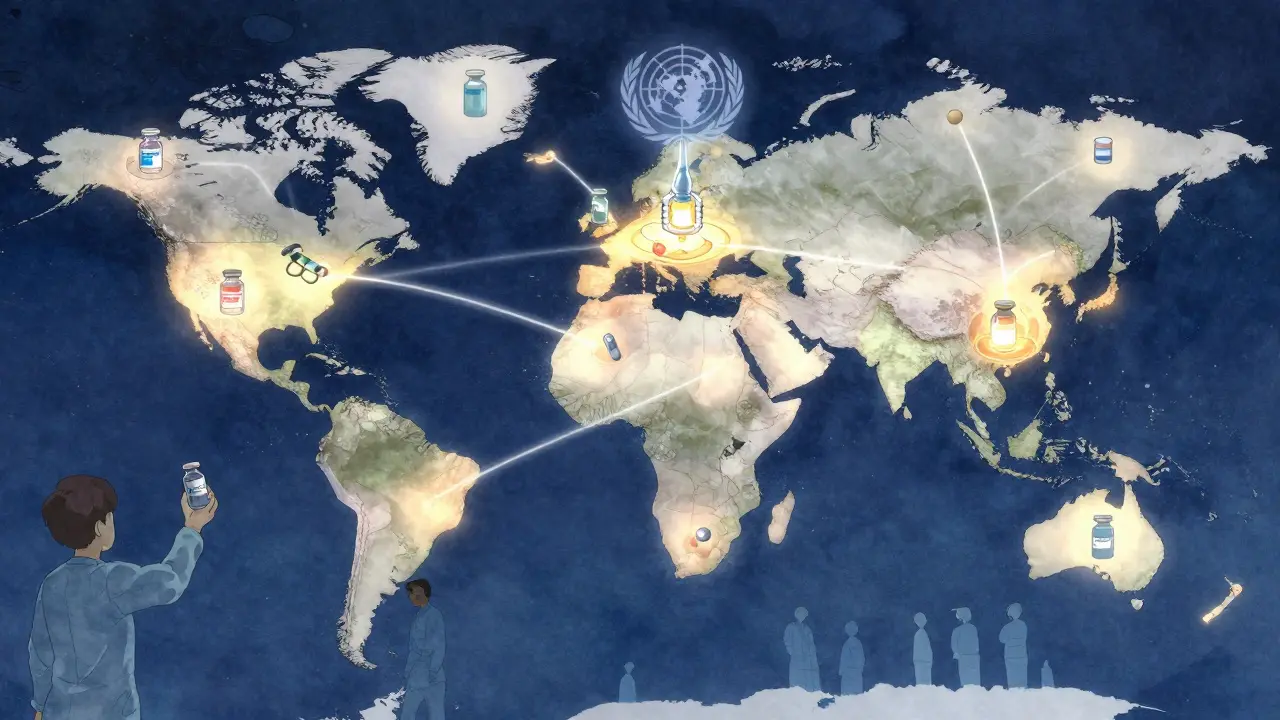
Despite its success, the WHO Model List isn’t perfect. One big issue? It’s too slow to adapt. Between 2018 and 2022, 12% of newly approved drugs worldwide made it onto the 2023 list. In the U.S., 35-45% of new drugs are added to formularies within a year. The WHO’s process, while thorough, can’t match the speed of innovation-or the pressure from pharmaceutical companies pushing for inclusion.
Another problem is implementation. Even if a country adopts the list, it doesn’t mean the medicines are available. In Nigeria, only 41% of essential medicines were consistently stocked. Stockouts lasted an average of 58 days per drug. Why? Not because the list was wrong, but because supply chains broke down. Poor transport, corrupt distributors, or underfunded procurement systems can sink even the best-designed list.
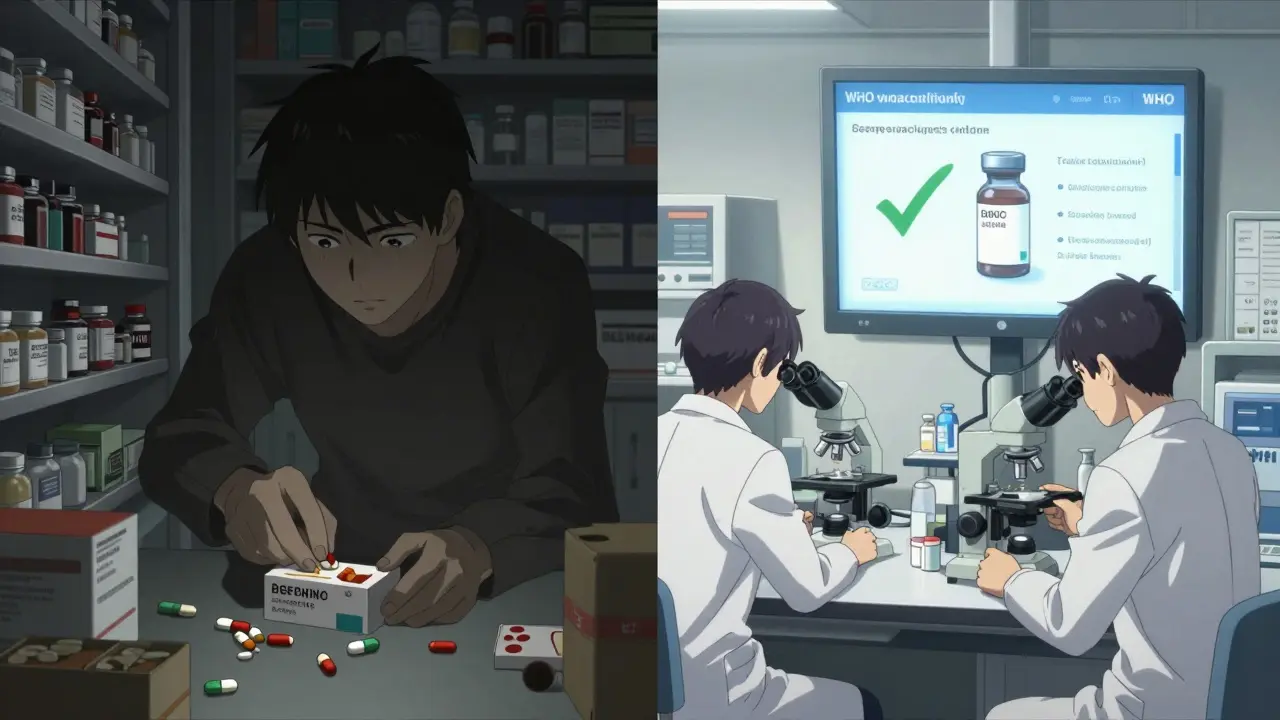
There’s also the issue of substandard drugs. WHO surveillance found that 10.5% of essential medicine samples in low- and middle-income countries were fake or degraded. Antibiotics and antimalarials are the most common targets. A patient might get a pill that looks right-but contains no active ingredient. That’s not a failure of the WHO list. It’s a failure of enforcement.
Real-World Impact: From Theory to Treatment
The real power of the WHO Model List shows up in places you won’t read about in headlines. In a rural clinic in Malawi, a nurse gives a child an oral antibiotic for pneumonia. The drug costs 50 cents. It’s a generic, prequalified by WHO. The child recovers. The family doesn’t go into debt.
In a hospital in Kenya, a woman with postpartum hemorrhage gets tranexamic acid-added to the list in 2017 despite some debate over evidence. It saved her life. In a pharmacy in Bangladesh, a diabetic gets insulin at 1/10th the price of the brand name. That’s because the government used the WHO list to negotiate bulk purchases.
These aren’t isolated cases. They’re the norm where the list is used well. The WHO estimates that its model has helped increase access to essential medicines in primary care from 51% in 2007 to 65% in 2022. That’s 14 percentage points of people who now have a fighting chance.
What’s Changing in 2024 and Beyond
The WHO is adapting. The 2023 list included 7 biosimilars-copies of complex biologic drugs like monoclonal antibodies. For the first time, it required tighter bioequivalence standards (85-115%) to ensure they’re as reliable as traditional generics. It also expanded pediatric formulations. In 2019, only 29% of listed medicines had child-friendly versions. In 2023, that jumped to 42%. That’s a direct response to parents and doctors who said, “We need liquid doses, not crushed tablets.”
A new app launched in September 2023 lets health workers in remote areas check the list offline. It’s been downloaded over 127,000 times across 158 countries. That’s not just tech-it’s access.
Future updates will focus on antibiotic stewardship. Draft guidelines released in early 2024 ask countries to create “tiers” for antibiotics-keeping the most powerful ones for last, to slow resistance. This is a smart move. It turns the list from a static catalog into a living tool for public health.
The WHO’s goal by 2030? Raise essential medicine availability in primary care from 65% to 80%. That’s ambitious. But if it happens, it will mean millions more people getting the right drug at the right time.
The Bigger Picture
The WHO Model List doesn’t just guide drug selection. It challenges the whole idea that medicine should be a luxury. It says: if a drug saves lives, it should be available to everyone-not just those who can pay. That’s why it focuses on generics. Why it demands quality. Why it refuses to be swayed by marketing.
It’s not a perfect system. It’s slow. It’s underfunded. It struggles with supply chains and counterfeit drugs. But it’s the only global standard that puts health before profit. And for that reason, it remains one of the most powerful tools in global health.
For countries trying to build better health systems, it’s not a suggestion. It’s a roadmap. And for the millions who depend on it, it’s the difference between life and death.
Is the WHO Model List the same as a national formulary?
No. The WHO Model List is a global recommendation that identifies which medicines should be available based on public health need, safety, and cost. National formularies are local implementation tools that decide how to use those medicines-like which ones to stock, how to pay for them, or whether to require prior authorization. The WHO list tells countries what to consider. National formularies tell them how to act.
Do high-income countries use the WHO Model List?
Not directly. Countries like the U.S. or Germany use their own formularies, often based on private databases like Micromedex or Lexicomp. But many U.S. hospitals and global health programs reference the WHO list when working in low-resource settings. It’s not used for domestic prescribing, but it’s a key reference for international aid and humanitarian work.
Why are so many generics on the WHO list?
Generics are cheaper, equally effective, and can be produced at scale. The WHO prioritizes affordability and access over brand names. In fact, 46% of the 2023 list is made up of generics. This isn’t a compromise-it’s a strategy. For diseases affecting millions, the goal is to treat as many people as possible, not to protect patent profits.
Can a medicine be removed from the WHO list?
Yes. If new evidence shows a medicine is less effective, unsafe, or no longer cost-effective, it can be removed. For example, some older antibiotics were removed as resistance grew. The list is reviewed every two years, and changes are based on updated data-not politics or pressure.
How does the WHO ensure generic quality?
All generics on the list must meet WHO Prequalification standards or be approved by a stringent regulatory authority like the FDA or EMA. This means independent testing of bioequivalence, manufacturing quality, and stability. The WHO also runs a global surveillance system that tests samples from markets worldwide to catch substandard or fake drugs.
What’s the biggest challenge to using the WHO Model List?
Implementation. Many countries adopt the list on paper but struggle to deliver the medicines. Weak supply chains, lack of funding, poor training, and corruption often mean the right drugs never reach the clinic. The WHO is now shifting focus from just listing medicines to helping countries build systems that can actually deliver them.





John Cena
February 18, 2026 AT 12:15 PMReally appreciate how the WHO sticks to the science instead of corporate noise. I work in global health logistics, and seeing countries like Ghana cut costs by 29% while improving access? That’s the kind of policy that actually moves the needle. No fluff, no marketing - just what works.
Also, the part about pediatric formulations jumping from 29% to 42%? Huge win. Kids aren’t just small adults - they need dosing that doesn’t require a chemistry set to administer.
Irish Council
February 18, 2026 AT 20:16 PMGenerics are the backbone but dont get me started on the fake meds in Nigeria and India. WHO says they test samples but how many really get tested. 10.5% fake drugs and you think thats acceptable. This is a scam dressed as salvation.
aine power
February 19, 2026 AT 22:30 PMIt’s not that the list is flawed. It’s that the people who implement it don’t have the capacity to execute. The WHO gives a blueprint. The rest is on us. And we’re failing.
Tommy Chapman
February 21, 2026 AT 12:12 PMWhy are we letting foreign bureaucrats decide what medicine Americans should use? This list is a Trojan horse for socialist healthcare. We have FDA-approved drugs here. Why are we importing third-world standards? If you can’t afford insulin, that’s your problem - not the system’s.
Hariom Sharma
February 22, 2026 AT 13:10 PMAs someone from India, I’ve seen this firsthand. Our government used the WHO list to negotiate bulk buys - insulin dropped from ₹3000 to ₹300 per vial. That’s not policy, that’s life-saving. And yeah, we still have stockouts. But at least now we have a fighting chance. The list isn’t perfect - but without it? We’d be back to praying for medicine.
Nina Catherine
February 23, 2026 AT 21:42 PMomg i didnt even know the WHO had an app for this!! just downloaded it and it works offline?? that’s so cool. my cousin works in a clinic in rural peru and they’re always out of meds… this could be a game changer. also i love that they added liquid forms for kids. i remember my brother had to crush pills into applesauce… yuck.
Maddi Barnes
February 25, 2026 AT 09:08 AMOkay but let’s be real - the WHO’s ‘rigorous review’ is basically a popularity contest with PhDs. They reject 50% of applications? Sure. But how many of those were pushed by pharma companies from the Global South trying to compete? Meanwhile, Big Pharma gets their $20,000-a-year cancer drugs on every US formulary with zero scrutiny. This list is a nice PR move - but it’s not equity. It’s optics.
And don’t even get me started on ‘bioequivalence’ standards. 85-115%? That’s a 30% window. For a drug like lithium? That’s a death sentence waiting to happen. They’re playing Russian roulette with people’s brains and calling it science. 😒
Benjamin Fox
February 26, 2026 AT 12:47 PMGenerics = good. Fake meds = bad. WHO = good at listing but bad at enforcing. 🤷♂️
Jonathan Rutter
February 27, 2026 AT 15:58 PMI’ve been in this field for 20 years. I’ve seen the WHO list change from a tool to a dogma. It’s not just slow - it’s actively hostile to innovation. Biosimilars? Took them 6 years to even consider them. Meanwhile, we had functional biosimilars on the market in the U.S. for 3 years before the WHO even blinked.
And the ‘no lobbying’ claim? Please. Every time a country like Brazil or Thailand pushes for inclusion, the WHO gets flooded with letters from NGOs, NGOs funded by pharma, NGOs funded by governments with hidden agendas. The process is transparent - but it’s not clean. It’s a theater of bureaucracy with a humanitarian face.
And let’s not pretend the 7.5 score threshold is objective. I’ve sat in those review meetings. One expert from Sweden says ‘too expensive’ and the whole drug gets axed. Another from Kenya says ‘this saved 10,000 kids last year’ and it gets in. It’s not data. It’s politics with a lab coat.
Jana Eiffel
February 28, 2026 AT 22:48 PMThe philosophical underpinning of the WHO Model List represents a profound epistemological shift in global health governance: from market-driven therapeutic paradigms to a communitarian model predicated on the intrinsic dignity of human life. The insistence on affordability, scalability, and programmatic feasibility constitutes not merely a pharmacological criterion, but a moral imperative - one that challenges the neoliberal hegemony of pharmaceutical capitalism. One might argue that the list’s greatest contribution lies not in its content, but in its symbolic function: it reclaims medicine as a public good, rather than a commodified artifact of intellectual property.
Freddy King
March 1, 2026 AT 14:51 PMLet’s deconstruct this. The WHO’s ‘cost-effectiveness’ metric is built on QALYs - which inherently devalue elderly populations and disabled lives. A drug that extends life by 1.2 QALYs for a 70-year-old gets rejected while a drug that adds 3.5 QALYs to a 25-year-old gets in. That’s not public health. That’s ageism wrapped in a spreadsheet.
And the ‘programmatic feasibility’ criterion? It’s a euphemism for ‘we don’t want to deal with cold chains or trained nurses.’ So we prioritize pills over injectables, even when injectables are more effective. That’s not pragmatism - it’s institutional laziness dressed up as equity.
Laura B
March 2, 2026 AT 22:54 PMThis is one of those rare things where the system actually works - even if imperfectly. I love that they’re now focusing on delivery, not just listing. Because what good is a medicine if it never leaves the warehouse? Also, the offline app? Genius. I hope more health workers in remote areas get trained on it. We need more of this - not less.