

Medication Risk Checker for Orthostatic Hypotension
This tool helps you understand your risk of developing dizziness when standing due to your medications. Based on the article, certain medications significantly increase this risk. Please select all medications you currently take.
Important: This is not a medical diagnosis. Always consult your doctor about any medication concerns.
Antipsychotics
(Quetiapine, Clozapine)Alpha-blockers
(Doxazosin, Terazosin)Tricyclic antidepressants
(Amitriptyline)Diuretics
(Hydrochlorothiazide)Opioids
(Oxycodone, Morphine)Levodopa
(For Parkinson's)Risk Factor Summary
Your Risk Assessment
Important note
This assessment is based on the medications you selected. Always consult your healthcare provider before making any changes to your medication regimen.
Personalized Recommendations
Please select your medications to see personalized advice.
Key Prevention Tips
- Stand up slowly from sitting or lying positions
- Stay well-hydrated (aim for 2-2.5L water daily)
- Wear compression stockings if recommended
- Review all medications with your doctor
Standing up too fast and feeling like the room is spinning? You’re not alone. Millions of people, especially those over 65, experience this every day-and most don’t realize it’s likely caused by their own medications. This isn’t just a minor annoyance. It’s orthostatic hypotension, a dangerous drop in blood pressure that happens the moment you stand, and it’s one of the most common-and preventable-side effects of prescription drugs.
What Exactly Is Orthostatic Hypotension?
Orthostatic hypotension means your blood pressure plummets when you go from lying down or sitting to standing. The medical definition is simple: a drop of more than 20 mm Hg in systolic pressure (the top number) or more than 10 mm Hg in diastolic pressure (the bottom number) within three minutes of standing. That drop cuts off blood flow to your brain just long enough to make you dizzy, lightheaded, or even pass out.It’s not just about being unsteady. Studies show people with this condition have a 15-30% higher risk of falling. And over a decade, their risk of dying from any cause jumps by 24-32%. The worst part? Many doctors don’t catch it until after a fall or fainting episode.
Which Medications Cause the Most Problems?
It’s not one drug. It’s a whole list-many of them prescribed for common conditions. Here are the big offenders:- Antipsychotics like quetiapine, clozapine, and chlorpromazine: Up to 40% of people taking these at higher doses develop dizziness on standing. Quetiapine, often used for anxiety or sleep, is a frequent culprit.
- Alpha-blockers like doxazosin and terazosin: Prescribed for high blood pressure or enlarged prostate, these drugs relax blood vessels so hard that your body can’t adjust when you stand.
- Tricyclic antidepressants like amitriptyline: Used for nerve pain or depression, they interfere with the nervous system’s ability to tighten blood vessels.
- Diuretics like hydrochlorothiazide: These water pills reduce blood volume. Less fluid in your veins means less pressure to push blood to your brain when you stand.
- Opioids like oxycodone and morphine: About 15-25% of elderly patients on these report dizziness on standing. The risk doubles if they’re also taking benzodiazepines or drinking alcohol.
- Levodopa: Used for Parkinson’s, this drug causes orthostatic hypotension in 30-50% of users.
Here’s the scary part: if you’re taking four or more medications, your risk of orthostatic hypotension goes up nearly sixfold. And if you’re over 70? You’re over three times more likely to have it than someone under 50.
Why Does This Happen?
Your body normally reacts to standing by tightening blood vessels and speeding up your heart to keep blood flowing to your brain. But many medications interfere with this reflex. Some block the nerves that tell your blood vessels to constrict. Others reduce blood volume. Some calm your nervous system so much that it doesn’t respond fast enough.It’s not your body failing-it’s the drugs messing with your body’s built-in safety system. The good news? When you stop or adjust the drug, your body often bounces back. In fact, 70-85% of medication-induced cases improve once the cause is removed.
How Do You Know It’s Medication-Related?
Symptoms usually hit within seconds to minutes of standing. You might feel:- Dizziness or lightheadedness
- Blurred vision
- Nausea
- Weakness
- Headache
- Feeling like you’re about to faint
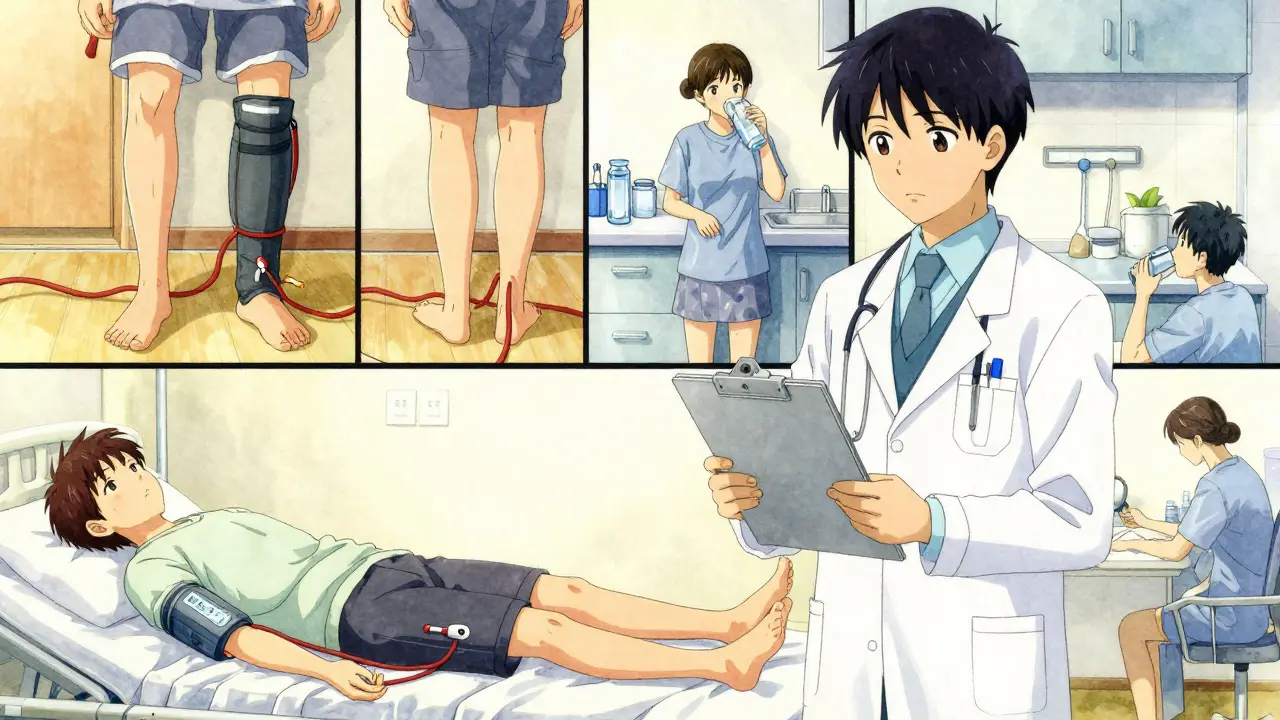
Some people don’t feel anything at all-up to 40% of cases are silent. That’s why doctors need to check your blood pressure in two positions: lying down and then standing. The measurement must happen at exactly 1, 2, and 3 minutes after standing. If your pressure drops more than 20/10 during that window, and you have symptoms, it’s orthostatic hypotension.
And here’s something most patients don’t realize: if you’ve had dizziness for months and no one connected it to your meds, you’re not alone. A Mayo Clinic study found 55% of patients had symptoms for over two months before their doctor realized the link.
What Can You Do About It?
The first step is simple: talk to your doctor. Don’t stop your meds on your own-but do ask these questions:- Could any of my medications be causing dizziness when I stand?
- Is there a lower dose or a different drug that works just as well but doesn’t lower blood pressure as much?
- Can I cut one of these pills without risking my main condition?
Many times, the answer is yes. One patient on Reddit shared that after starting quetiapine, she fainted twice. Her BP dropped from 128/82 to 92/61 in under two minutes. After switching to a different antipsychotic, her symptoms vanished in a week.
Another case from Cleveland Clinic’s patient forums involved a 78-year-old on six meds, including hydrochlorothiazide and lisinopril. After stopping the water pill, her falls stopped completely in 72 hours.
Non-Medication Strategies That Work
Even if you can’t change your meds right away, these simple steps help:- Stand up slowly. Don’t jump out of bed. Sit on the edge for 30 seconds before standing.
- Drink more water. Aim for 2-2.5 liters a day. Dehydration makes blood pressure drops worse.
- Wear compression stockings. These help push blood back up from your legs. They’re not glamorous, but they work.
- Don’t stand still for long. If you’re waiting in line, shift your weight or march in place.
- Avoid hot showers and alcohol. Both dilate blood vessels and make dizziness worse.
Some patients also benefit from eating smaller, more frequent meals. Large meals can cause blood to pool in your gut, making standing even harder.
When Should You Worry?
Not every dizzy spell is dangerous. But if you’ve had:- Two or more falls in the past year
- Loss of consciousness, even briefly
- Confusion or chest pain with dizziness
- Symptoms that don’t improve after adjusting meds or lifestyle
…you need a full evaluation. This isn’t just about falling. Orthostatic hypotension is linked to higher risks of stroke, heart failure, and dementia over time.
What’s New in Treatment?
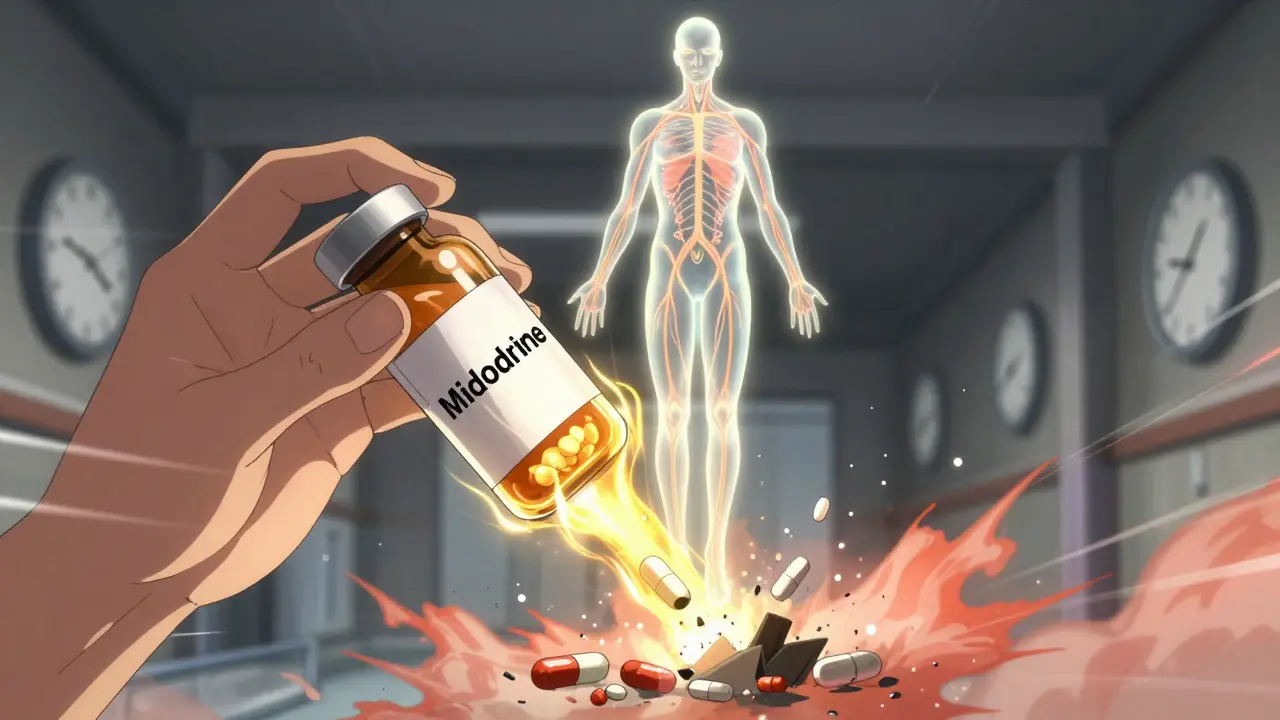
In 2023, the American Heart Association updated its guidelines and now recommends midodrine (10 mg three times a day) as the first drug option if lifestyle changes don’t work. It tightens blood vessels without raising resting blood pressure too much. In trials, it reduced symptoms by 65%.Pharmaceutical companies are also working on next-gen drugs designed to treat conditions like high blood pressure or Parkinson’s without triggering orthostatic hypotension. Early trials show promise with new alpha-1A selective agonists that target blood vessels more precisely.
For now, the best tool is still awareness. The American Geriatrics Society lists 12 high-risk medications for older adults-and since 2020, the FDA requires all drugs with more than 5% orthostatic hypotension risk to include that warning on their labels.
Final Thought: This Is Preventable
Orthostatic hypotension isn’t just an old-age problem. It’s a medication problem. And it’s one of the few side effects that’s almost always avoidable. You don’t need to live with dizziness every time you stand up. Your body isn’t broken-you just might be on the wrong mix of pills.Talk to your doctor. Ask about your meds. Keep a symptom log: note when you feel dizzy, what you were doing, and what you took that day. That simple record can save you from a fall-and maybe even save your life.
Can orthostatic hypotension go away on its own?
Yes, if it’s caused by medication. In 70-85% of cases, symptoms improve or disappear after stopping or adjusting the drug. It can take days to weeks for your body to readjust. But if it’s caused by nerve damage from diabetes or Parkinson’s, it’s less likely to resolve without treatment.
Is orthostatic hypotension the same as low blood pressure?
No. Low blood pressure (hypotension) is a general term for consistently low readings. Orthostatic hypotension is a sudden drop that happens only when you stand. Someone can have normal blood pressure while lying down but still experience dangerous drops when upright.
Should I stop taking my blood pressure medication if I feel dizzy?
Never stop a blood pressure medication without talking to your doctor. Stopping suddenly can cause dangerous spikes in pressure or worsen your original condition. Instead, report your symptoms. Your doctor may lower the dose, switch to a different drug, or add a non-hypotensive alternative.
Can dehydration make orthostatic hypotension worse?
Absolutely. Dehydration reduces blood volume, making it harder for your body to maintain pressure when standing. That’s why doctors recommend drinking 2-2.5 liters of water daily. Avoid excessive caffeine and alcohol-they make dehydration worse.
Are compression stockings really helpful?
Yes. Medical-grade compression stockings (15-20 mm Hg pressure) help squeeze blood back up from your legs, preventing it from pooling. Studies show they reduce dizziness and falls in over 60% of patients with medication-induced orthostatic hypotension. Wear them daily, especially when you’re up and about.
How long does it take for symptoms to improve after changing meds?
Most patients see improvement within 3-7 days after stopping or reducing the offending drug. In some cases, like with diuretics, symptoms vanish in under 72 hours. For drugs that affect the nervous system, like antidepressants or antipsychotics, it may take up to two weeks for full recovery as your body readjusts.
Can I still exercise if I have orthostatic hypotension?
Yes-but be smart. Avoid standing still during workouts. Use seated exercises like cycling, rowing, or swimming. Always warm up slowly and cool down gradually. Never stand up quickly after lying down on a bench. If you feel dizzy, sit or lie down immediately. Regular, gentle exercise actually helps your body adapt and improves circulation over time.
Is orthostatic hypotension more common in older adults?
Yes. About 5-30% of adults over 65 have it, depending on how many meds they take and whether they have other health issues. Aging slows down the nervous system’s ability to regulate blood pressure. Combine that with multiple medications-and the risk skyrockets. That’s why routine screening is now standard in geriatric care.









paul walker
January 29, 2026 AT 17:22 PMMan I thought I was just getting old until I read this. Stood up after nap last week and saw stars like I was in a superhero movie. Turns out it was the quetiapine for my anxiety. Switched to sertraline and boom-no more fainting. Doc didn’t even ask about dizziness till I brought it up. Don’t let them brush you off.
Frank Declemij
January 31, 2026 AT 12:53 PMOrthostatic hypotension is underdiagnosed because clinicians focus on the disease being treated not the side effects of treatment. The 20/10 mmHg threshold is well established but rarely applied in practice. Diuretics and alpha-blockers are the most common culprits in elderly patients with polypharmacy. A simple standing BP check should be routine.
Pawan Kumar
January 31, 2026 AT 16:48 PMLet me ask you something-how many of these so-called 'medication-induced' cases are actually the result of pharmaceutical companies suppressing data on side effects? The FDA only mandated warnings after lawsuits piled up. And midodrine? That’s just another profit-driven band-aid. They don’t want you to know that lifestyle changes can reverse this entirely-because pills sell better than wisdom.
Keith Oliver
February 2, 2026 AT 11:03 AMBro this is wild. I’m on 6 meds including hydrochlorothiazide and terazosin and I’ve been dizzy since 2021. My PCP said 'it’s just aging' like I’m some broken toaster. Then I found this thread. Changed my meds? Done. No more falls. Why do doctors act like we’re supposed to just live with this? It’s not normal. It’s negligence.
Robin Keith
February 4, 2026 AT 07:42 AMIt’s profoundly tragic, isn’t it? That our modern medical system has become so mechanized, so reductionist, that we’ve lost sight of the body as a dynamic, self-regulating organism-instead treating it like a machine that can be patched with chemical fixes without consequence. We’ve normalized dizziness as 'just part of growing old'-when in truth, it’s the sound of our nervous system screaming for help, and we’re handing it a pill instead of listening. And then we wonder why people fall. Why they die. Why their lives shrink to the size of a hospital bed. This isn’t just about blood pressure-it’s about the erosion of holistic care, and the commodification of human vulnerability.
Sheryl Dhlamini
February 5, 2026 AT 03:02 AMOMG I cried reading this. I’ve been dizzy for 18 months and thought I was going crazy. My doc said 'maybe you need more coffee' 😭 I started wearing compression socks and drinking water like my life depended on it-because it did. I haven’t fallen since. I’m telling every grandma I know about this. You’re not broken. Your meds are.
Laia Freeman
February 6, 2026 AT 10:52 AMso i was on amitriptyline for nerve pain and kept blacking out when i got up to pee at night. my dr was like 'oh that's normal' so i just stopped it cold turkey. no more dizziness. no more nightmares. no more 'normal'. i'm not sorry. if your dr doesn't listen, listen to your body.
rajaneesh s rajan
February 7, 2026 AT 12:01 PMWow. So the real conspiracy isn’t about vaccines or moon landings-it’s that doctors are too lazy to check BP standing up. Meanwhile, people are dying because no one bothered to ask, 'Hey, do you get dizzy when you stand?' Not even once. I mean… really? We’ve got AI that can diagnose skin cancer from a selfie but can’t measure blood pressure in two positions? This isn’t medicine. It’s a game of telephone where the patient is the last one holding the message.