

Medication Cost Affordability Checker
Check Your Medication Affordability
Calculate if your monthly medication costs are affordable based on income and insurance. The standard guideline is that medications should cost no more than 10% of your monthly income.
Every year, millions of people around the world experience preventable harm because of medication errors. But not everyone is affected equally. People of color, older adults, non-English speakers, and those with low income face higher risks - not because of personal choices, but because of how healthcare systems are designed. Medication safety isn’t just about pills and prescriptions. It’s about who gets heard, who gets tested, and who gets left behind.
Who’s Most at Risk?
Black, Hispanic, and Indigenous patients are more likely to experience dangerous medication errors than their white counterparts. Why? It’s not because they’re less careful. It’s because systems fail them. A 2021 study across five NHS hospitals found that patients from minority ethnic groups had far fewer medication incidents reported - not because they made fewer mistakes, but because they were less likely to be believed, understood, or even asked if something felt wrong.
Language barriers play a huge role. A Spanish-speaking patient in a hospital without interpreters might not realize they’re being given a drug that interacts with their blood pressure medication. A Black elder might hesitate to speak up after years of being ignored or dismissed. These aren’t isolated incidents. They’re patterns.
And it gets worse when it comes to new drugs. From 2014 to 2021, the median number of Black participants in FDA-approved clinical trials was only one-third of their share of the population burden for those diseases. That means we don’t fully know how a drug affects them - its side effects, dosage needs, or long-term risks. When a new cancer drug hits the market, but no one tested it on enough Black patients, that’s not just a research gap. It’s a safety gap.
Why Do These Disparities Keep Happening?
Implicit bias is one of the biggest hidden drivers. Studies show clinicians are less likely to prescribe adequate pain medication to Black patients, assuming they have a higher tolerance or are more likely to misuse opioids. That’s not based on science - it’s based on outdated stereotypes. And when pain is undertreated, patients turn to over-the-counter drugs or skip doses, leading to dangerous interactions or worsening conditions.
Then there’s access. In 2022, nearly 19% of Hispanic Americans and 11.5% of Black Americans were uninsured. Compare that to 7.4% of white Americans. If a new, safer medication costs $800 a month and you’re working two jobs just to keep the lights on, you’re not going to fill that prescription. You’ll skip doses, cut pills in half, or go without. That’s not a personal failure - it’s a system failure.
Even reporting systems are biased. Hospitals track medication errors, but they don’t always account for race, language, or income. A patient who doesn’t speak English might not be asked to report an error. A nurse might assume an elderly patient “doesn’t understand” their meds - so they don’t bother explaining. These assumptions get baked into data, making it look like certain groups have fewer problems - when really, the problems just go unrecorded.

What’s Being Done - And What’s Missing
The World Health Organization launched its Medication Without Harm initiative in 2017 with a bold goal: cut severe medication errors by 50% globally in five years. That’s important. But the initiative’s real test is whether it reaches the most vulnerable. So far, only 86 of 194 countries have committed to it - and even among those, few have concrete plans to address equity.
The Joint Commission, which accredits U.S. hospitals, recently made equity a formal patient safety goal. That’s progress. But a 2024 survey by the American Hospital Association found that only 32% of hospitals have actual programs to tackle medication safety disparities. The rest say it’s important - but don’t fund it, train for it, or measure it.
Some places are trying. A hospital in Chicago started using trained medical interpreters for every high-risk medication conversation. Another in Atlanta partnered with local churches to host medication safety workshops in Black and Latino neighborhoods. They didn’t just hand out flyers - they asked residents what problems they’d faced, listened, and built solutions around those stories.
The Role of Technology
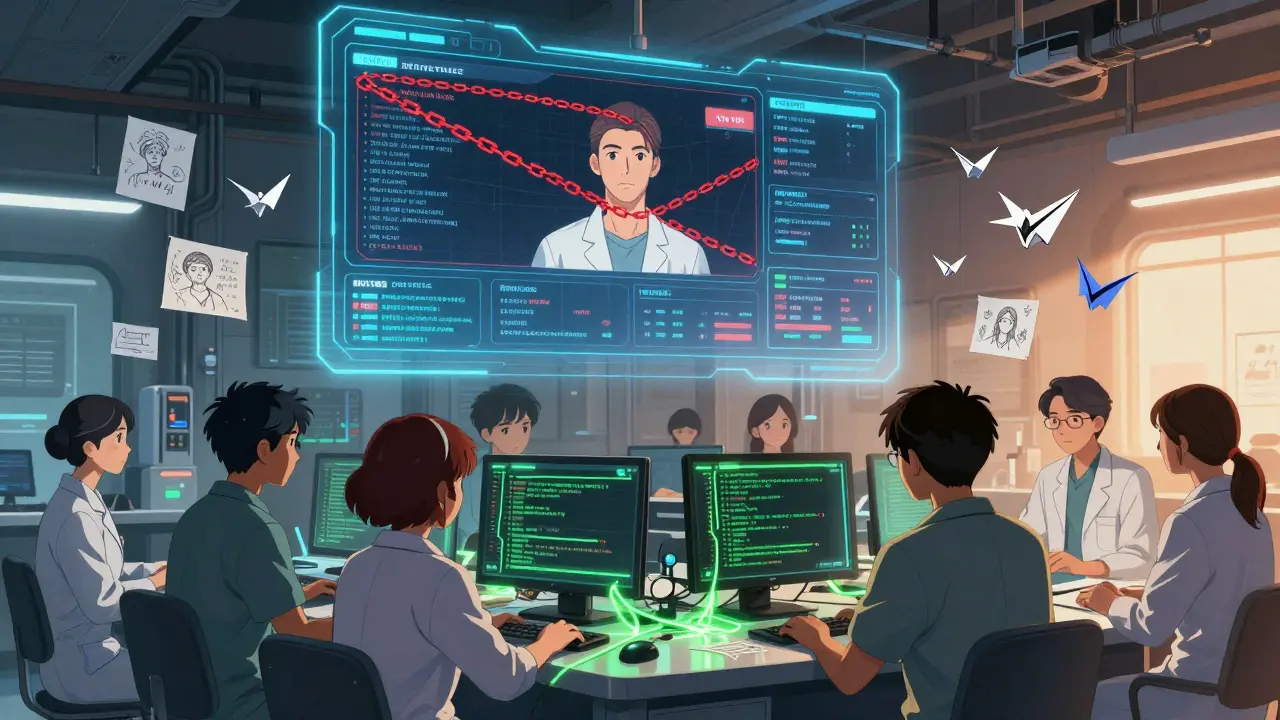
Technology can help - or hurt. Artificial intelligence tools that predict which patients are at risk for medication errors often use historical data. And guess what? That data is full of bias. If past records show Black patients rarely get certain drugs, the algorithm learns to assume they’re “low risk” - even if they’re not. That’s how technology ends up reinforcing harm.
But there’s hope. In 2024, the U.S. Office of the National Coordinator for Health Information Technology launched a $15 million project to build algorithms that actively detect disparities in electronic health records. These tools don’t just flag errors - they flag who is being missed. If a hospital sees that Hispanic patients are consistently not getting follow-up calls after a new diabetes prescription, the system alerts staff to intervene.
What Needs to Change
Fixing this isn’t about adding one more training module. It’s about redesigning systems from the ground up. Here’s what works:
- Cultural competency training - not one-off workshops, but ongoing, role-specific education that includes real patient stories and feedback.
- Language access - live interpreters, not translation apps, for all high-risk medication discussions.
- Community-led research - involve patients from marginalized groups in designing safety programs, not just as subjects, but as partners.
- Standardized reporting - every medication error report must include race, language, income level, and insurance status. You can’t fix what you don’t measure.
- Cost transparency - hospitals and pharmacies should be required to tell patients upfront if a drug is affordable - and offer alternatives if it’s not.
And here’s the hardest truth: if a hospital doesn’t track disparities in medication safety, it’s not being safe - it’s being blind.
The Bottom Line
Medication safety isn’t just about avoiding mistakes. It’s about ensuring everyone has an equal chance to be safe. You can’t have patient safety without equity. You can’t have equity without listening. And you can’t listen without changing how you ask questions - and who you ask them to.
The data is clear. The solutions exist. What’s missing is the will to act - and the courage to admit that the system isn’t broken for some people. It’s broken for them on purpose.





Amit Jain
February 7, 2026 AT 06:10 AMlol this is why i dont trust western medicine. they test drugs on 3 people and then sell them to 300 million. if you're brown or black, you're just a data point. they don't care if you die as long as the stock price goes up.
Mark Harris
February 8, 2026 AT 08:53 AMthis is why we need community health workers on every floor. not just translators - real people who know the culture, the food, the stress, the fear. we're not fixing systems with spreadsheets. we're fixing them with trust.
Savannah Edwards
February 9, 2026 AT 05:13 AMi work in a hospital in chicago and let me tell you - the difference between having a live interpreter and just using an app is night and day. one woman cried because she finally felt heard when her daughter translated the doctor's words in real time. that moment? that's the whole point. it's not about compliance. it's about dignity.
Patrick Jarillon
February 11, 2026 AT 04:44 AMthis is all just woke propaganda. they're not 'disproportionately affected' - they're just bad at following instructions. if you can't read a label or afford meds, maybe you shouldn't be on them. the system works fine. people just need to stop blaming everyone else.
Mayank Dobhal
February 12, 2026 AT 19:34 PMyou think this is bad? in india we have 10 doctors per 10k people. here? 2.6. and you're worried about algorithms? fix the damn supply chain first.
Natasha Bhala
February 13, 2026 AT 17:18 PMi just want people to be safe. that's it. no politics. no blame. just make sure the person who needs the pill gets it without having to choose between rent and refills.
Gouris Patnaik
February 15, 2026 AT 08:31 AMthis is what happens when you let emotion replace science. if you're not statistically significant, you're not a priority. that's how research works. stop crying about fairness and start doing the math.
Ashley Hutchins
February 16, 2026 AT 19:02 PMwhy do we even have to talk about race? just give everyone the same meds and stop making everything about identity. this is why america is falling apart. everyone wants to be a victim now.
Niel Amstrong Stein
February 17, 2026 AT 22:05 PMthe real revolution? asking patients what they need instead of telling them what they need. i saw a clinic in memphis where they served soul food while explaining insulin. no charts. no jargon. just people. that’s the future. 🍗💊
Mary Carroll Allen
February 19, 2026 AT 00:44 AMi work in pharma and i can tell you - the data is skewed because the trials are designed to exclude people who don't fit the mold. we know this. we just don't fix it because it's expensive. and honestly? we're scared of the lawsuits if we admit how broken it is.
Eric Knobelspiesse
February 19, 2026 AT 03:37 AMthe real issue? we treat medication safety like a math problem. it's not. it's a human one. if you don't see the person behind the chart, you're not helping - you're just moving numbers around. and that's why we keep failing.