
More than 65% of cancer patients now get some part of their chemotherapy treatment at home. It’s convenient. It’s less stressful than driving to a clinic every day. But it also comes with serious risks if you don’t know how to handle it safely. Chemotherapy drugs aren’t just strong-they’re dangerous to anyone who comes into contact with them, even if they’re not the patient. A single spilled pill, a contaminated glove, or a toilet flushed without the lid down can expose a child, a partner, or a pet to toxins that could cause skin burns, nausea, or even long-term health problems like infertility or secondary cancers.
Why Home Chemo Is Different from Hospital Chemo
At the hospital, nurses wear full protective gear. They use sealed containers, ventilated cabinets, and specialized disposal systems. At home, you don’t have those systems. That’s why the rules change. You’re not just taking medicine-you’re managing a hazardous material. The CDC and the Oncology Nursing Society say all chemotherapy drugs, whether given as an IV, a pill, or an injection, are hazardous. That includes newer targeted therapies and immunotherapies, not just old-school chemo. Even if the pill looks harmless, it can still be dangerous if crushed, chewed, or touched with bare hands.One of the biggest mistakes people make? Thinking that because the drug is taken orally, it’s safer. Oral chemo makes up about 25-35% of outpatient treatments. But that means more pills are being handled in kitchens, bathrooms, and bedrooms. And that’s where exposure happens.
Storage: Keep It Locked, Cool, and Out of Reach
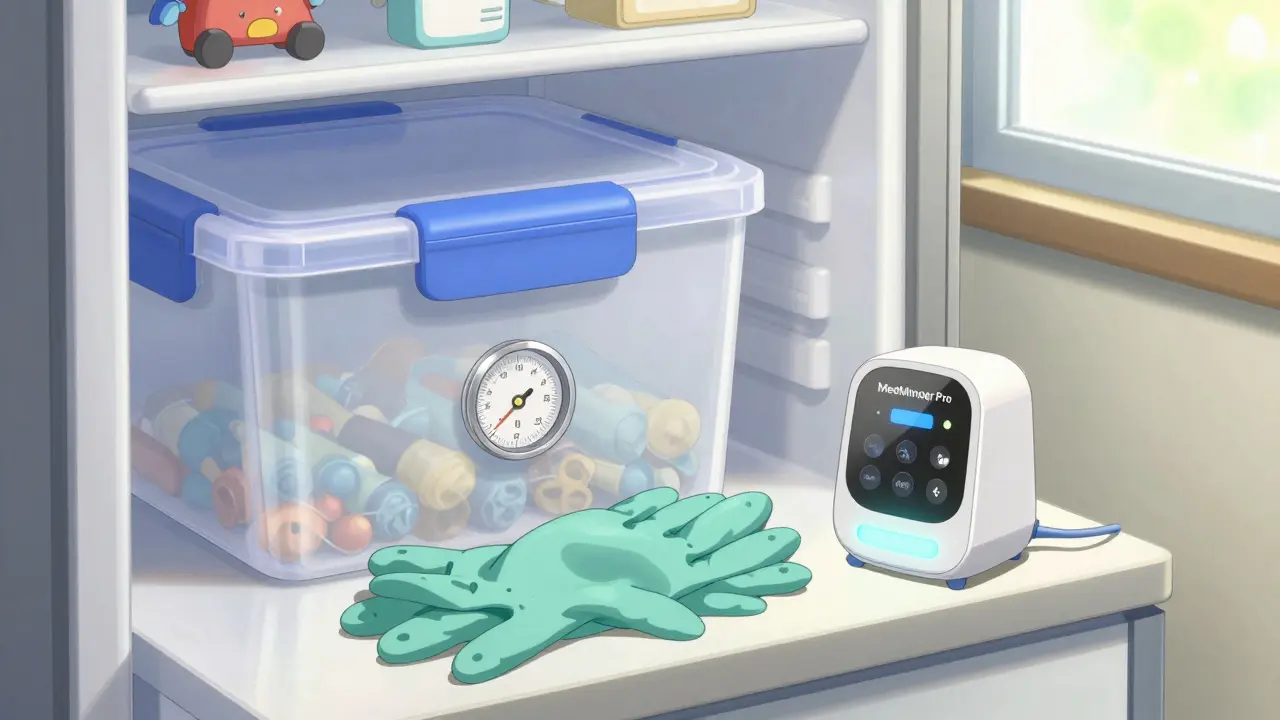
Never leave chemo pills or liquids on the counter. Never store them in the medicine cabinet with your vitamins or painkillers. The American Cancer Society and drug manufacturers like Pfizer and Roche all say the same thing: store chemotherapy in a locked container, away from children and pets.Temperature matters too. Some drugs need to stay cold-between 2°C and 8°C (36°F-46°F). Others are fine at room temperature-15°C to 30°C (59°F-86°F). Check the label or ask your pharmacist. Putting a cold drug on the counter or a room-temperature drug in the fridge can ruin it. And don’t transfer pills to another container. Keep them in the original bottle with the label intact. That’s the only way you’ll know the name, dose, and expiration date.
If you have a fridge dedicated to chemo, label it clearly. Use a plastic bin or a sealed container inside the fridge to prevent spills from contaminating food. And if you live with someone who’s pregnant, breastfeeding, or trying to get pregnant, they must not handle or even be near the storage area. Studies show chemo drugs can show up in breast milk for up to 72 hours after a dose.
Handling: Gloves, No Exceptions
You must wear gloves every single time you touch chemo pills, liquids, or containers. Not just when you’re giving the dose-also when you’re picking up the bottle from the fridge, opening the box, or throwing away an empty container.Latex gloves? Don’t use them. They don’t block chemo chemicals. You need nitrile gloves, at least 5 mil thick. Most home safety kits include two pairs. Always wear two layers-inner and outer. That way, if the outer one tears, the inner one still protects you.
Never crush, cut, or chew pills. Even a tiny bit of powder in the air can be inhaled. That’s how caregivers get sick. Use a pill splitter only if your nurse gives you a special tool designed for hazardous drugs. And never handle pills with bare hands-even if they’re in a blister pack. Use a clean cup or tray to transfer them. Wash your hands before and after, even if you wore gloves.
The 48-Hour Rule: Your Biggest Safety Window
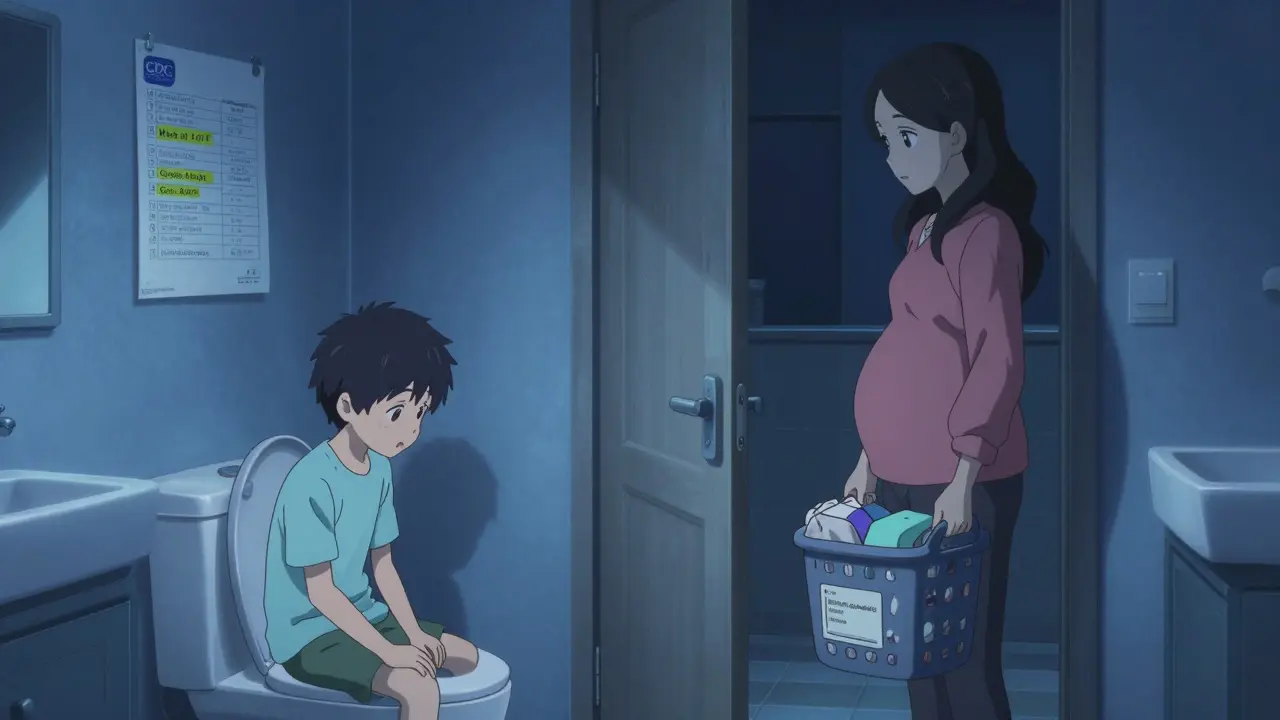
The biggest danger isn’t when you take the drug. It’s after. For 48 hours after each dose, your body is still getting rid of the chemo through urine, stool, sweat, vomit, saliva, and even semen or vaginal fluid. Some drugs, like cyclophosphamide, can stick around for 72 hours.That means every bathroom use, every laundry load, every hug has to be handled with care. Flush the toilet twice with the lid down. Always. Wash your hands for at least 20 seconds after using the bathroom. If you’re the caregiver, wear gloves when cleaning up vomit or changing soiled bedding. Use a dedicated trash can with a lid for all contaminated items-gloves, wipes, tissues, even the pill bottle after it’s empty.
Wash your clothes and bedding separately, in hot water (140°F or 60°C), with regular detergent. Don’t mix them with the family’s laundry. Use a separate towel and washcloth for the patient during this window. If you’re sharing a bathroom, clean the sink, faucet, and toilet handle with disinfectant after each use.
Spills and Accidents: What to Do
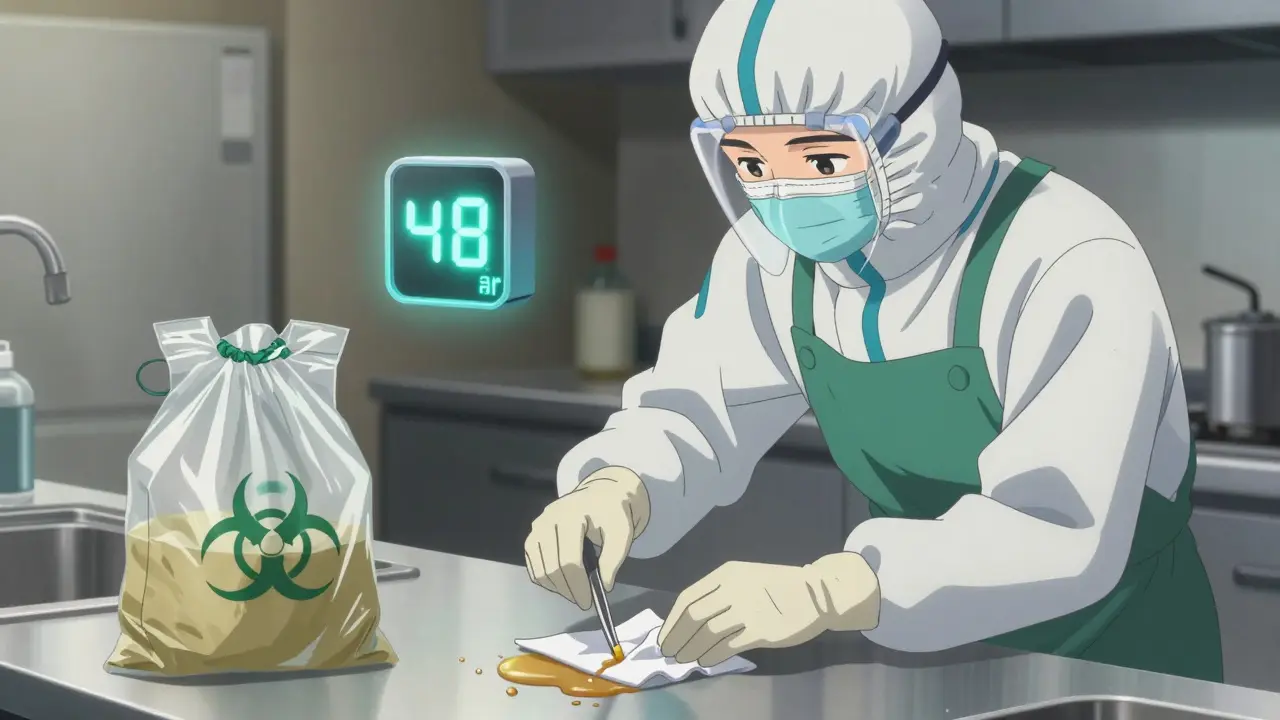
You should have a chemo spill kit. It’s usually provided by your hospital or pharmacy. It includes absorbent pads, forceps, disposable gloves, sealed bags, and instructions. If you don’t have one, ask for it. You can’t improvise this.If a pill drops on the floor, don’t pick it up with your fingers. Use the forceps. Put it in a sealed bag. Wipe the area with an absorbent pad. Then put everything in a hazardous waste bag. Never vacuum or sweep chemo spills-this spreads particles into the air.
If a liquid spills, cover it immediately with the absorbent pad. Let it sit for 15 minutes. Then use the pad to wipe it up. Seal everything. Wash your hands. Call your oncology nurse if you’re unsure. The Oncology Nursing Society runs a 24/7 hotline: 1-866-877-7851. They’ve answered over 12,000 calls in 2022 alone.
Disposal: Don’t Throw It in the Regular Trash
You might think: “It’s empty. It’s just plastic.” But it’s not. Empty pill bottles, used gloves, wipes, and even the packaging from chemo drugs are contaminated. You can’t throw them in your regular trash.Here’s the truth: Most home chemo waste doesn’t need a medical waste bin. You don’t need to pay for special pickup. The CDC says you can put used gloves, wipes, and empty bottles in a sealed plastic bag and throw it in your regular household trash-as long as it’s not sharps. Needles and syringes? Those go in a sharps container. But pills, vials, and gauze? Seal them in a bag. Label it “Chemotherapy Waste.” Put it in your trash. Most people get this wrong. A 2021 Mayo Clinic survey found 37.5% of patients were confused about disposal. Don’t be one of them.
Protecting Others: Kids, Pets, and Pregnant People
Children and pets are especially vulnerable. They crawl on floors, lick surfaces, and touch everything. Keep them away from the bathroom for at least 48 hours after treatment. Don’t let them sleep in the same bed as the patient during that time. If you have a cat or dog, clean their paws if they come near the patient’s bedding.Pregnant women and those trying to conceive should avoid all contact with chemo drugs and contaminated materials. Even touching a glove that had chemo on it can be risky. The same goes for breastfeeding. Studies show chemo drugs can pass into breast milk. If you’re breastfeeding, talk to your doctor before starting treatment. You may need to stop for the duration.
Tools and Tech That Help
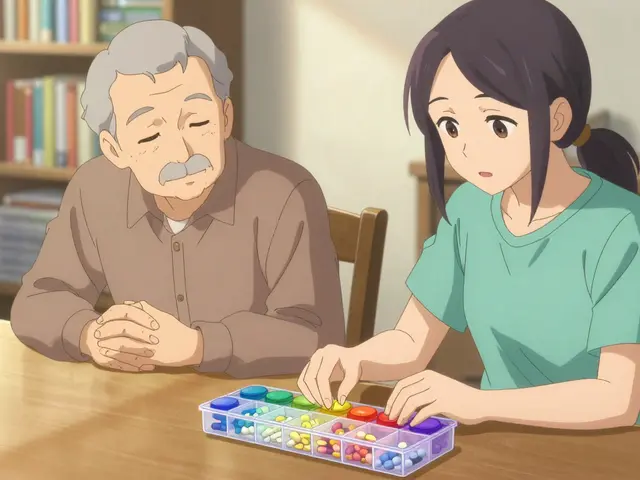
There’s a new device called the MedMinder Pro Chemo. It’s a smart pill dispenser that talks to you. It tells you when to take your pill, reminds you to wear gloves, and logs every dose. It’s FDA-approved and now used by over 12,000 patients. It doesn’t replace training, but it helps prevent mistakes.Also, keep a “chemo diary.” Write down the date and time of every dose. That way, you know exactly when the 48-hour window starts and ends. Many hospitals give you a printable checklist. Download the CDC’s free Home Chemo Safety Checklist-it’s been downloaded over 87,000 times.
Training Is Not Optional
You can’t learn this from a pamphlet. You need hands-on training. Most cancer centers require 2-3 hours of instruction from an oncology nurse before you take chemo home. That includes how to put on gloves, how to clean up a spill, how to talk to your family about safety. If your provider didn’t offer this, ask. If they say no, call your local cancer society. Many have free training programs.And here’s the hard truth: Rural patients are less likely to know the 48-hour rule. Only 58% of rural patients got it right in a 2022 survey, compared to 82% in cities. If you live in a rural area, don’t assume you’re getting the same info. Push for it. Call the NCCN or the American Cancer Society. They’ll send you materials or connect you with a nurse.
What’s Changing in 2026
The FDA now requires all oral chemo drugs to include clear home safety instructions on the packaging. OSHA is cracking down-home health agencies can be fined $15,625 per violation for not training staff. And the list of hazardous drugs is growing. In 2023, the CDC added 27 new drugs to the list, including newer targeted therapies like sotorasib and dostarlimab.The goal? By 2030, 75-80% of chemo will be given at home. That means safety rules will keep getting stricter. But the core hasn’t changed: gloves, distance, time, and cleanliness. If you follow those, you protect not just the patient-but everyone in the house.
Can I touch my chemo pills with bare hands if I wash them off later?
No. Chemo drugs can be absorbed through your skin-even in small amounts. Washing your hands afterward doesn’t undo the exposure. Always wear nitrile gloves when handling any chemo medication, even if it’s just one pill.
Is it safe to have visitors while I’m on home chemo?
Yes, but with limits. Visitors can come after the 48-hour window has passed. During that time, avoid close contact like hugging or sharing food. Keep the patient’s bathroom and bedroom off-limits to others. If someone is pregnant, immunocompromised, or has young children, keep them away entirely during the exposure period.
What should I do if I accidentally spill chemo liquid on my skin?
Wash the area immediately with soap and water for at least 15 minutes. Remove any contaminated clothing. Call your oncology nurse or the NCCN hotline (1-866-877-7851). Even if you feel fine, report it. Some reactions don’t show up for hours or days.
Can I reuse chemo gloves if I wash them?
Never. Chemo gloves are single-use only. Washing them doesn’t remove the chemicals-they can still leak through. Always use a fresh pair for every task. Keep extra gloves in your spill kit.
Do I need to clean the whole house after chemo treatment?
No. Focus on the bathroom and the area where you handle medication. Clean the sink, toilet, and any surfaces that might have touched chemo or contaminated items. There’s no need to deep-clean carpets or walls. The risk is only from direct contact with bodily fluids or drug residue-not airborne particles.
What if I forget to wear gloves and touch the medication?
Wash your hands thoroughly right away. Monitor yourself for skin redness, itching, or nausea in the next 24-48 hours. Report the incident to your care team. They may ask you to come in for a check-up. Most exposures don’t cause serious harm, but it’s better to be safe than sorry.
Can I travel while on home chemo?
Yes, but plan ahead. Keep your chemo in its original bottle, in a cooler if it needs refrigeration. Bring extra gloves, wipes, and a sealed disposal bag. Never leave chemo in a hot car. Always carry your medication list and emergency contact info with you. If you’re flying, check with the airline-some require a doctor’s note for chemo drugs.
What to Do Next
If you’re starting home chemo, don’t wait until the day before. Ask your care team for:- A chemo safety kit (gloves, spill materials, instructions)
- Training from an oncology nurse
- A copy of the CDC’s Home Chemo Safety Checklist
- The phone number for the Oncology Nursing Society hotline
- A list of your drugs and their storage requirements
Set up your ‘chemo zone’-a corner of the bathroom or kitchen with a clean surface, gloves, and supplies. Make a checklist. Practice with your caregiver. And remember: this isn’t about fear. It’s about control. You’re not powerless. You’re equipped. Follow the rules, and you protect everyone you love.




Sue Stone
January 23, 2026 AT 13:59 PMJust got my first oral chemo pack yesterday. Didn’t know gloves were a must-I was just using my fingers like normal. Holy crap, this post saved me. Going to buy nitrile gloves right now.
dana torgersen
January 24, 2026 AT 01:20 AMWow… I mean… like… wow. I didn’t realize that even… like… the *bottle* after it’s empty… is still dangerous?? Like, I thought once the pill’s gone, it’s just plastic… but no. No no no. I’m crying. Not because I’m sad-because I’m terrified. And also… kinda… grateful? This is life-or-death info. Someone needs to put this on a billboard.
Stacy Thomes
January 24, 2026 AT 13:01 PMY’ALL. I’m a caregiver for my mom. I thought I was doing great-until I read this. I’ve been washing her clothes with mine. I’ve been letting my toddler hug her after she takes her pills. I just threw out all my latex gloves and bought 5-mil nitrile. I’m redoing our whole chemo zone tonight. You’re not just saving a life-you’re saving the whole damn family. Thank you.
Andrew Smirnykh
January 25, 2026 AT 04:46 AMI’m from a rural town in Nebraska. We don’t have oncology nurses coming to our door. I’ve been managing my dad’s chemo for 11 months. I didn’t know about the 48-hour rule until today. I’m printing the CDC checklist and hanging it by the fridge. If this saves even one kid from accidental exposure, it’s worth it.
Anna Pryde-Smith
January 27, 2026 AT 02:59 AMOkay, I’m done pretending this isn’t terrifying. I just flushed the toilet with the lid up once-last week. I’ve been sleeping in the same bed as my husband who’s on chemo. I’ve let my dog lick the bathroom floor. I just vomited a little in my mouth from fear. But I’m not panicking-I’m acting. I’ve ordered a spill kit, I’m buying a separate towel, and I’m sleeping on the couch. I’m not dying because I was lazy. This is non-negotiable.
Dawson Taylor
January 27, 2026 AT 07:49 AMConsistency in protocol reduces risk. Gloves, containment, and timing are the triad of safety. No exceptions. The data is unambiguous. Adherence is the only variable between harm and protection.
Kerry Evans
January 28, 2026 AT 13:48 PMPeople like you think you’re being responsible by wearing gloves. But you’re still ignoring the real issue: you’re letting your loved one take toxic drugs at home in the first place. This isn’t medicine-it’s a corporate cost-cutting scam. Hospitals do this to save money. You’re just the disposable caregiver. You think gloves make it okay? You’re being manipulated. The system is broken, and you’re helping it survive.
Sallie Jane Barnes
January 29, 2026 AT 17:40 PMThank you for sharing this with such clarity and care. I’ve been a nurse for 22 years, and I’ve seen too many families unintentionally harm themselves because no one took the time to explain. This isn’t just information-it’s compassion in action. Please, if you’re reading this and you’re scared: you’re not alone. Reach out. Ask for help. Your safety matters. Your family’s safety matters. You deserve to be protected. And you’re not being dramatic for caring. You’re being brave.