

When you're on warfarin, even small changes in your diet can have big consequences. One of the most dangerous but often overlooked interactions involves something many people think is harmless: cranberry. Whether it's juice, capsules, or even cranberry-flavored snacks, these products can push your INR levels into dangerous territory - increasing your risk of serious, even life-threatening bleeding.
Why Warfarin Needs Careful Management
Warfarin is a blood thinner used to prevent clots in people with atrial fibrillation, artificial heart valves, or a history of deep vein thrombosis. It works by blocking vitamin K’s role in clotting, but it’s not simple to use. The difference between a safe dose and a dangerous one is tiny. That’s why doctors monitor your INR - a test that measures how long it takes your blood to clot. For most people, the target range is 2.0 to 3.0. Anything above 4.5 puts you at high risk for bleeding. Below 2.0, the drug isn’t working well enough.Unlike newer blood thinners (DOACs), warfarin’s effects are easily changed by what you eat, drink, or take as a supplement. That’s why cranberry has become such a concern.
The Cranberry Connection: More Than Just a Trend
Cranberry has long been marketed as a natural way to prevent urinary tract infections. It’s sold as juice, tablets, powders, and even gummies. Many older adults - the same group most likely to be on warfarin - turn to it because they believe it’s safe and natural. But that’s where the danger lies.Starting in 2003, doctors began seeing unusual spikes in INR levels in patients who had recently started drinking cranberry juice. One case involved a 78-year-old man on a stable 45 mg/week warfarin dose. After drinking half a gallon of cranberry-apple juice every week, his INR jumped to 6.45 - more than double the upper limit. He nearly bled to death. Another patient’s INR rose from 2.5 to 8.3 after just two weeks of daily cranberry juice. That’s not an anomaly. It’s a pattern.
How Cranberry Interferes With Warfarin
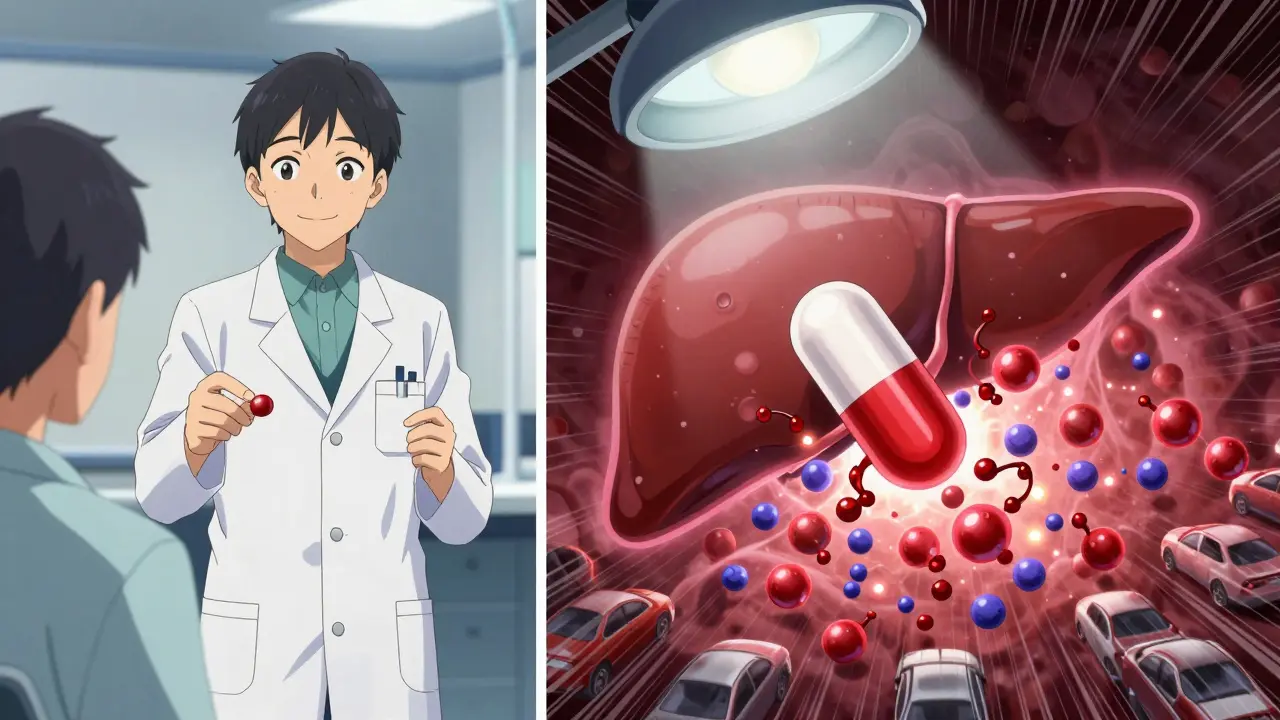
The science behind this interaction is clear. Warfarin is broken down in your liver by an enzyme called CYP2C9. Cranberry contains compounds - mainly flavonoids like quercetin - that block this enzyme. When CYP2C9 slows down, warfarin builds up in your bloodstream. More warfarin means stronger blood thinning. That’s why your INR rises.Studies show cranberry can increase S-warfarin (the more powerful form of the drug) by 30% to 50%. That’s the same level of effect as some antibiotics known to be dangerous with warfarin. The FDA recognized this in 2005 and required all warfarin labels to include a warning about cranberry. Health Canada, the European Medicines Agency, and New Zealand’s Medsafe have all followed suit.
Not All Cranberry Products Are the Same
You might think, “I only drink a little juice once in a while - it’s fine.” But the risk doesn’t depend on how often you consume it. It depends on how much active compound is in it. Sweetened cranberry juice cocktails often contain higher concentrations of flavonoids than pure juice. Even cranberry capsules labeled as “standardized” can vary widely in potency.One study found that as little as 150 mL (about half a cup) of cranberry juice per day was enough to trigger an INR spike in a sensitive patient. Another person reported no issues after five years of daily cranberry pills - but that doesn’t mean it’s safe for you. Genetics play a role. Some people have a natural variation in their CYP2C9 gene that makes them far more sensitive to cranberry’s effects. If you have the *CYP2C9*2 or *CYP2C9*3 variant, your INR could spike two to three times higher than someone without it.
What the Experts Say
The American Heart Association, the American College of Chest Physicians, and the Merck Manual all agree: avoid cranberry products if you’re on warfarin. Dr. Sarah Jones, a cardiologist at Massachusetts General Hospital, says: “Even occasional consumption can cause unpredictable INR elevations. Complete avoidance is the safest approach.”Some researchers point out that not all clinical trials show a strong interaction. But here’s the catch: those trials often used small doses, short durations, or didn’t account for genetic differences. Real-world cases - the ones that land people in the ER - are consistently tied to cranberry use. The Naranjo scale, used to judge whether a reaction is caused by a substance, rates cranberry-warfarin interactions as “probable” in nearly 80% of documented cases.
What to Do If You’re on Warfarin
If you’re currently taking warfarin:- Avoid all cranberry products. That includes juice, capsules, extracts, powders, and flavored drinks.
- Don’t assume “natural” means safe. Supplements aren’t regulated like drugs. A “cranberry pill” might contain 10 times more active compounds than a glass of juice.
- Check labels. Many cranberry-flavored teas, yogurts, and snacks contain concentrated cranberry extract.
- Ask your doctor about alternatives. For preventing UTIs, methenamine hippurate or low-dose antibiotics are safer options.
If you’ve already been consuming cranberry products:
- Stop immediately.
- Call your doctor or anticoagulation clinic.
- Get your INR checked within 3 to 5 days.
Most people see their INR return to normal within a week after stopping cranberry - but only if they don’t wait too long. Delaying can mean internal bleeding, stroke, or worse.

What If You’re on a DOAC Instead?
If you’ve switched from warfarin to a direct oral anticoagulant (DOAC) like apixaban, rivaroxaban, or dabigatran, cranberry is much less of a concern. These drugs don’t rely on CYP2C9 for breakdown. That’s one reason why DOAC use has grown so quickly - fewer food interactions mean less monitoring and fewer surprises.But even then, caution is wise. There’s still limited data on cranberry’s interaction with DOACs. Until more is known, it’s best to avoid large or frequent amounts.
Bottom Line: When in Doubt, Skip It
Cranberry isn’t the only food that interacts with warfarin - grapefruit, green leafy vegetables, and alcohol do too. But cranberry is uniquely dangerous because it’s widely available, marketed as healthy, and often consumed without thinking. People don’t realize they’re putting themselves at risk.There’s no safe amount of cranberry if you’re on warfarin. No “just a little.” No “once a week.” The risk isn’t worth it. Your doctor isn’t being overly cautious - they’re trying to keep you alive.
If you love cranberry, find other ways to support urinary health. Drink plenty of water. Practice good hygiene. Talk to your doctor about safer alternatives. Your blood thinner is working hard to protect you. Don’t let a glass of juice undo it.
Can I drink cranberry juice if I take warfarin?
No. Cranberry juice - even in small amounts - can significantly raise your INR and increase your risk of serious bleeding. All forms of cranberry, including juice, capsules, and extracts, carry this risk. Avoid them completely while on warfarin.
How quickly can cranberry affect my INR?
INR levels can rise within 3 to 7 days of starting cranberry products. In some cases, spikes have been seen as early as 2 days. If you’ve recently started consuming cranberry and notice unusual bruising, nosebleeds, or dark stools, get your INR checked immediately.
What if I’ve been drinking cranberry juice for years without issues?
Some people may not see an effect due to genetic differences in how they metabolize warfarin. But that doesn’t mean it’s safe. Your body’s response can change over time, especially if you start taking new medications, change your diet, or develop liver or kidney issues. The safest choice is to stop cranberry products entirely.
Are cranberry supplements safer than juice?
No. Supplements often contain concentrated forms of cranberry extract, sometimes with higher levels of the compounds that interfere with warfarin. A single capsule may have the same effect as a full glass of juice - or more. They’re not regulated like drugs, so potency varies widely.
What should I use instead of cranberry for UTI prevention?
Talk to your doctor about alternatives like methenamine hippurate, low-dose antibiotics, or simply drinking more water. D-mannose is another option with less evidence of interaction, but still discuss it with your provider before trying it. Avoid anything marketed as a “natural remedy” without checking its safety with your anticoagulation team.
Do newer blood thinners have the same problem?
Direct oral anticoagulants (DOACs) like apixaban and rivaroxaban are not broken down by the same liver enzyme as warfarin, so cranberry is far less likely to interfere. But there’s still not enough long-term data to say it’s completely safe. It’s best to avoid cranberry products even if you’re on a DOAC - especially in large or frequent amounts.
Next Steps for Patients
If you’re on warfarin:- Stop all cranberry products today.
- Review your pantry, fridge, and supplement cabinet - remove anything with cranberry.
- Call your anticoagulation clinic and schedule an INR test within the next 5 days.
- Ask your doctor for a list of safe UTI prevention methods.
- Set a reminder to check labels on all drinks and snacks for “cranberry” or “Vaccinium macrocarpon.”
If you’ve had a recent INR spike and weren’t sure why, ask your doctor if cranberry could be the cause. Most cases are preventable - if you know what to look for.





Shane McGriff
January 19, 2026 AT 07:16 AMI’ve seen this happen too many times. A patient comes in with a scary INR, and turns out they’ve been sipping cranberry juice every morning thinking it’s ‘heart-healthy.’ It’s not. It’s a silent killer wrapped in a cute red bottle. The science is rock solid-CYP2C9 inhibition isn’t some myth, it’s biochemistry. And yeah, some folks don’t react, but why gamble with your life when the fix is just saying no to a juice box?
Renee Stringer
January 21, 2026 AT 02:30 AMPeople still don’t get it. ‘Natural’ doesn’t mean ‘safe.’ It means ‘unregulated, untested, and potentially lethal.’ Cranberry isn’t a vitamin-it’s a pharmacological wildcard. If you’re on warfarin and you think you’re being ‘smart’ by drinking it in moderation, you’re not smart. You’re just lucky so far.
pragya mishra
January 22, 2026 AT 04:22 AMWhy is this even a debate? My uncle died from internal bleeding because he drank cranberry juice with his blood thinner. He thought it was good for his kidneys. He didn’t even know what INR meant. Stop pretending this is about ‘personal choice.’ It’s about preventing preventable deaths.
Manoj Kumar Billigunta
January 23, 2026 AT 18:44 PMI know a lot of older folks who take warfarin. They trust their doctors, but they also trust their grandkids who say ‘cranberry juice is good for you.’ That’s the real problem-not the juice, but the misinformation. We need better education. Not fear. Not shame. Just clear, simple info. Maybe posters in clinics. Maybe videos in the waiting room. Something that sticks.
Andy Thompson
January 24, 2026 AT 22:20 PMHAHAHA. So now cranberry is a pharmaceutical weapon? 😂 Next they’ll say broccoli is a CIA plot to destabilize anticoagulation therapy. Who profits from this fear? Big Pharma. They want you on their expensive DOACs. Cranberry’s been around for 500 years. Warfarin? 70. Who’s really the threat here? 🤔
sagar sanadi
January 26, 2026 AT 02:24 AMOh wow. So now even juice is dangerous? Next they’ll ban water because it might dilute your blood. I bet they’ll say sunlight causes INR spikes too. This is why I don’t trust doctors. They scare you into buying pills.
kumar kc
January 26, 2026 AT 11:35 AMStop. Just stop. Cranberry + warfarin = death. No exceptions. No ‘but I’ve never had a problem.’ You’re not special. You’re just waiting for your turn.
Thomas Varner
January 26, 2026 AT 12:39 PMI’ve been on warfarin for 12 years. I drank cranberry juice for 8 of them. No issues. Zero. My INR’s been stable as a rock. I get that it’s risky for some… but to say ‘no safe amount’? That’s just not true. People need nuance, not dogma. 🤷♂️
clifford hoang
January 28, 2026 AT 05:12 AMThink about it… cranberry juice is banned in 14 countries for warfarin patients. But in the U.S.? It’s sold in every pharmacy next to aspirin. Coincidence? Or is this part of a larger agenda to push expensive drugs? The FDA warned in 2005… but the marketing never stopped. Who funds the ‘cranberry is safe’ ads? Who profits when you get hospitalized? 🧠👁️🗨️
Greg Robertson
January 29, 2026 AT 02:24 AMHey, I just started warfarin last month and I didn’t even know cranberry was a thing. Thanks for the heads-up. I’ve been drinking cranberry smoothies every day. I’ll stop right away. I appreciate you all being so clear-this is the kind of info that actually saves lives.
Crystal August
January 30, 2026 AT 15:45 PMWow, what a dramatic post. Honestly, I think this is just fearmongering. I’ve been eating cranberry gummies for years and my INR’s fine. Maybe you’re just trying to make yourself feel superior by scaring people.