
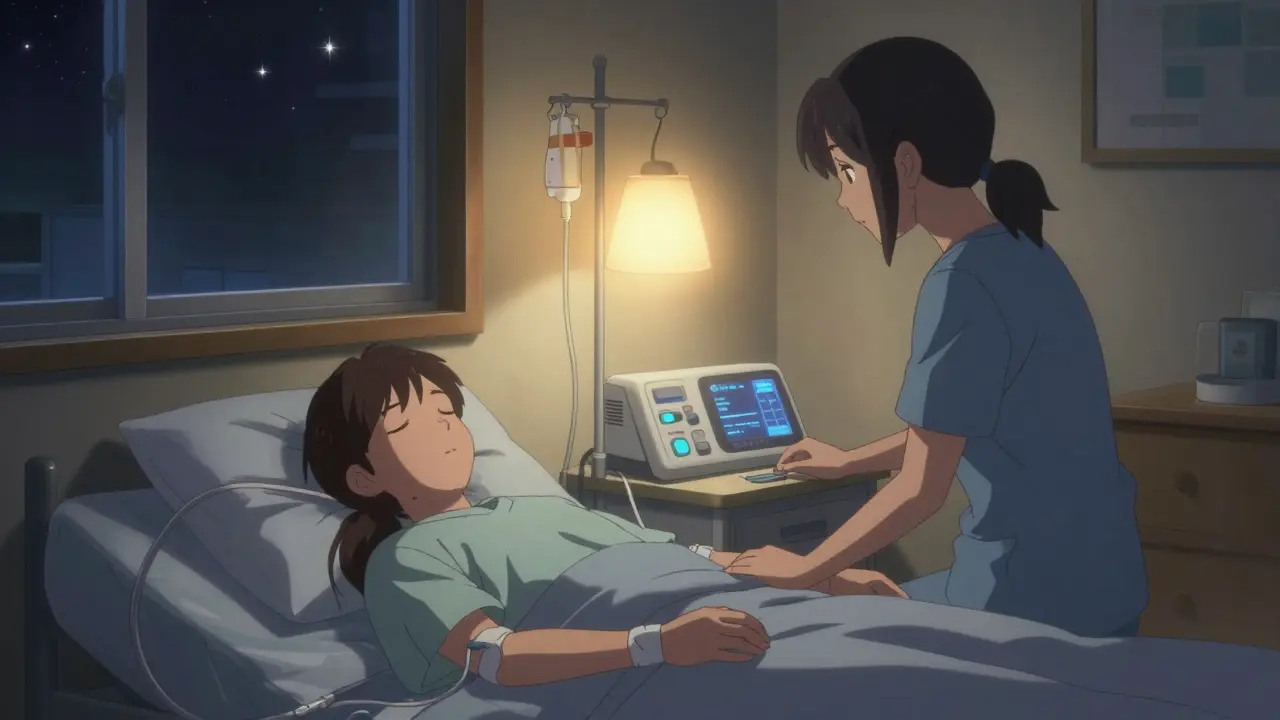
For people living with end-stage renal disease (ESRD), dialysis isn’t just a medical procedure-it’s a lifestyle. And for many, doing it at home changes everything. Home hemodialysis (HHD) lets patients take control of their treatment schedule, avoid daily trips to a clinic, and often feel better than they did on in-center dialysis. But it’s not as simple as plugging in a machine. It requires serious training, a reliable care partner, and a clear understanding of what to expect. If you’re considering home hemodialysis, here’s what you need to know about schedules, training, and real-world outcomes.
What Home Hemodialysis Actually Looks Like
Home hemodialysis works the same way as in-center dialysis: blood is pulled from your body, cleaned by a machine, and returned. The difference? You do it in your living room, kitchen, or bedroom-on your terms. You’re not stuck to a 3-day-a-week schedule dictated by a clinic’s shift changes. You choose when to dialyze: morning, midnight, or after dinner.
There are three main types of home hemodialysis schedules, each with different benefits:
- Conventional home hemodialysis: Three sessions per week, 3-4 hours each. This mirrors the standard in-center schedule but gives you control over timing-no more waking up at 4 a.m. to make a 6 a.m. appointment.
- Short daily hemodialysis: Five to seven sessions per week, 2-3 hours each. This is where many patients see the biggest improvements. More frequent treatments mean less fluid buildup, better blood pressure control, and fewer cramps. A 2021 study in the Clinical Journal of the American Society of Nephrology found these patients had a 28% lower risk of death compared to those on in-center dialysis.
- Nocturnal home hemodialysis: Done while you sleep, 3-7 nights a week, 6-10 hours per session. This slow, long treatment clears toxins more completely, especially phosphorus and middle molecules that standard dialysis misses. One study showed patients on nocturnal dialysis dropped their phosphate binder use by an average of 3.2 tablets per day.
The most common mistake people make? Assuming more frequent dialysis means more time spent hooked up. Actually, daily sessions are shorter. You trade one long, exhausting session for several manageable ones. Many patients say they feel more like themselves-less fatigued, less bloated, more alert.
Training Isn’t Just a Checklist-It’s a Skill Build
Training for home hemodialysis isn’t a one-week orientation. It’s a hands-on education that can take anywhere from 3 to 12 weeks, depending on your program, your comfort level, and whether you’re learning self-needling. Most programs require 4-6 weeks of daily training, with sessions lasting 3-5 hours each.
You and your care partner (more on that in a minute) will learn:
- How to set up and clean the dialysis machine and water system
- How to access your vascular graft or fistula with needles (self-needling is a game-changer but takes practice)
- How to calculate fluid removal based on weight gain
- How to read machine alarms and respond to errors like air in the line or low blood pressure
- How to store and order supplies, track treatments, and document issues
- How to recognize and handle emergencies-like bleeding, infection, or machine failure
Medicare covers up to 25 training sessions, which most programs use fully. But it’s not just about time-it’s about competence. Centers that use competency-based training (you must demonstrate mastery before moving on) have 30% fewer adverse events in the first year than those that just count hours.
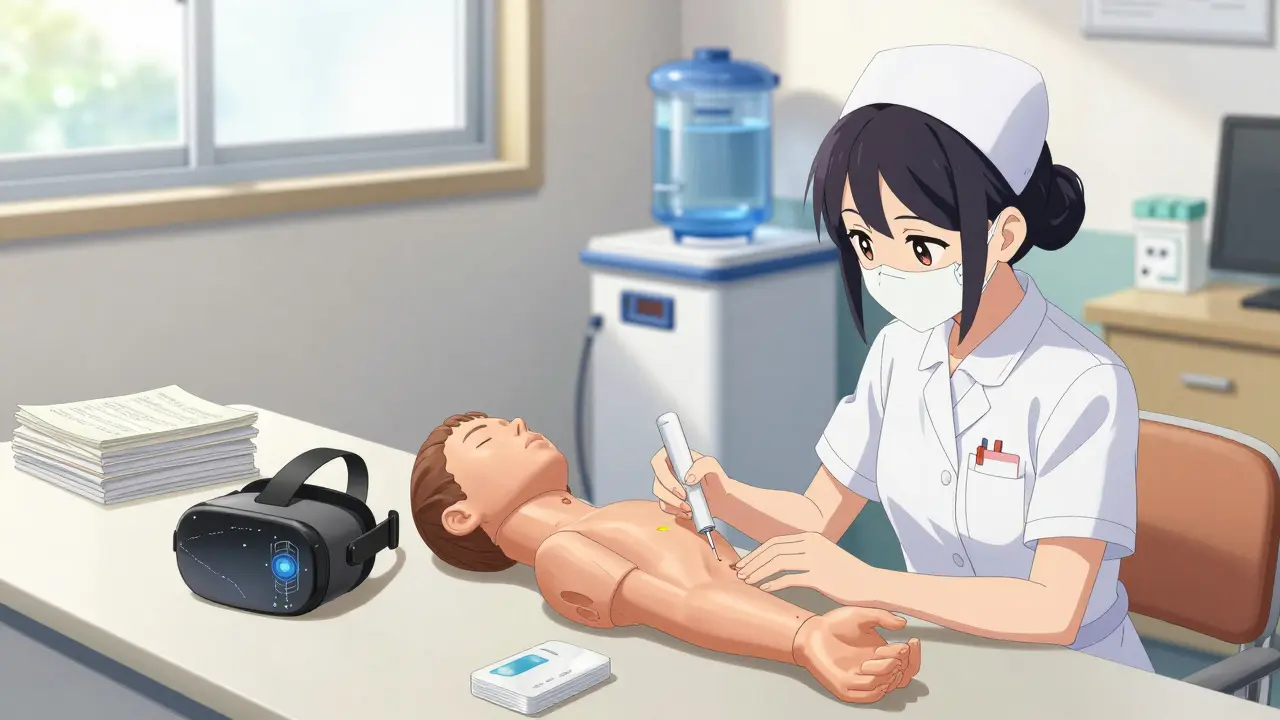
One of the hardest skills? Needling. About 45% of patients find inserting needles into their fistula or graft intimidating at first. Some programs now use virtual reality simulators to practice before ever touching a real patient. At the University of Washington Medical Center, this approach boosted competency rates from 78% to 92%.
You Can’t Do It Alone-The Care Partner Requirement
This is the biggest hurdle for many people. Medicare and most state regulations require that you never dialyze alone. You must have a trained care partner present for every session. That’s usually a spouse, adult child, or close friend.
Your care partner learns everything you do. They help set up the machine, check for leaks, monitor your vitals, and respond to alarms. They’re your backup if you feel dizzy, if the machine shuts down, or if you accidentally pull a needle.
But here’s the reality: about 30% of potential home dialysis patients don’t have someone who can or will take on this role. It’s not just about availability-it’s about emotional readiness. Some partners get overwhelmed. Others feel helpless. A 2022 Reddit survey of 85 home dialysis users found that 41% reported strain in their relationships because of the constant responsibility.
There are exceptions. Portable systems like the NxStage System One allow for solo dialysis under specific conditions, but they’re not the norm. Even then, you still need a way to call for help fast. Solo dialysis isn’t a shortcut-it’s a high-risk path only for the most experienced patients with strong backup plans.
Space, Water, and Electricity-The Hidden Setup Costs
Before you start, you need to make sure your home can handle it. You’ll need:
- Space: At least a 6x6-foot area for the machine, supplies, and access to your dialysis chair. No clutter. You need room to move safely.
- Water: Your machine needs ultra-pure water. Most homes require a reverse osmosis (RO) system connected to your plumbing. It must be cleaned and tested monthly-dialysate and water cultures are required by law.
- Electricity: A dedicated 120-volt, 20-amp circuit. No sharing with your refrigerator or microwave. Power surges can shut down the machine mid-treatment.
- Drain: A floor drain or special sink setup to handle the waste fluid.
These aren’t optional upgrades. If your water isn’t purified correctly, you risk serious infections. If your machine loses power during treatment, you could lose blood. That’s why training includes hands-on practice with water testing and emergency power backups.
Outcomes: Better Survival, Better Life
The data doesn’t lie. Home hemodialysis patients live longer and feel better.
A 2019 review in the American Journal of Kidney Diseases found home dialysis patients scored 37% higher on quality-of-life surveys than those on in-center treatment. Why? More sleep, fewer dietary restrictions, less travel stress, and more control over daily life.
Survival rates are better too. The U.S. Renal Data System (USRDS) reported a 15-20% lower death rate for home hemodialysis patients compared to those in clinics-especially those doing daily or nocturnal treatments. That’s not a small edge. That’s life-changing.
One patient in Seattle, who started nocturnal dialysis after 4 years of in-center treatments, told his nephrologist: “I used to feel like I was dying slowly every week. Now I feel like I’m living.” He now sleeps through his 8-hour sessions, wakes up refreshed, and walks his dog every morning.
But it’s not all smooth sailing. Common complaints include:
- Machine alarms going off in the middle of the night
- Managing 50+ supplies per week (tubing, needles, disinfectant, dialysate)
- Feeling guilty when your partner is exhausted
- Isolation-some patients say they feel like their whole world is now tied to a machine
These aren’t reasons to avoid home dialysis. They’re reasons to prepare. Join a support group. Talk to someone who’s been doing it for five years. Ask for help before you burn out.

Why Isn’t Everyone Doing It?
If home dialysis is better, why do only 12% of U.S. dialysis patients use it?
First, access. Only 12% of dialysis centers in the U.S. offer home training programs. If you live in a rural area, you might have to drive hours just to start training.
Second, reimbursement. Medicare pays for training, but not enough to cover the staff time it takes. Many nephrologists say they’d offer more home dialysis if they weren’t losing money on it.
Third, mindset. Many doctors still default to in-center dialysis because it’s what they’ve always done. But the American Society of Nephrology now recommends home dialysis as a first-line option for eligible patients. That’s changing slowly.
The federal Advancing American Kidney Health initiative aimed for 80% of new ESRD patients to start on home dialysis or transplant by 2025. That goal won’t be met. But with new portable machines like the WavelinQ endoAVF system and upcoming Medicare payment changes tied to outcomes-not location-adoption is accelerating.
Is Home Hemodialysis Right for You?
Ask yourself:
- Do I have someone reliable who can be with me every time I dialyze?
- Can I handle the responsibility of managing my own treatment?
- Do I have the space and plumbing in my home?
- Am I willing to learn new skills and troubleshoot problems?
- Do I want more control over my schedule and better quality of life?
If you answered yes to most of these, home hemodialysis could be the best decision you make for your health. It’s not easy. But for many, it’s the difference between surviving and truly living.
Can I do home hemodialysis without a care partner?
In almost all cases, no. Federal and state regulations require a trained care partner to be present during every treatment. There are rare exceptions with portable machines like NxStage System One, but solo dialysis is only approved for patients with years of experience, strong emergency plans, and approval from their nephrologist. For most people, having a care partner is non-negotiable for safety.
How long does home hemodialysis training take?
Training typically lasts 4 to 6 weeks, but it can range from 3 to 12 weeks depending on your learning pace, the type of machine, and whether you’re learning self-needling. Most programs require 20-30 supervised treatments before you’re cleared to dialyze at home. Medicare covers up to 25 training sessions, which is usually enough if you’re consistent.
Is home hemodialysis more expensive than in-center?
No, it’s not more expensive for you. Medicare covers the same amount for home hemodialysis as it does for in-center dialysis. The difference is in how the money is spent: home dialysis shifts costs from clinic staff and facility fees to equipment, supplies, and water systems-which are covered under your Medicare benefit. You won’t pay more out of pocket, but you may need to invest time in learning and home modifications.
Can I travel with home hemodialysis equipment?
It depends on your machine. Standard home dialysis machines are not portable. If you travel, you’ll need to arrange dialysis at a clinic near your destination. But portable systems like the NxStage System One can be packed and used on the road. You’ll still need to plan ahead-order supplies, confirm water quality at your destination, and coordinate with your care team. Many patients travel successfully with proper preparation.
What happens if the machine breaks down during treatment?
Every home hemodialysis program provides a 24/7 emergency line. If the machine shuts down, your care partner will follow your training protocol: stop the treatment, clamp the lines, and call for help. Most machines have backup alarms and safety features. You’ll also be taught how to safely disconnect and manage bleeding. In rare cases, you may need to go to the nearest ER. But with proper training, these events are uncommon.
How often does my doctor need to check in?
By law, your nephrologist must evaluate you at least once a month. This includes a physical exam, blood tests, and a review of your treatment logs. Some programs require more frequent check-ins, especially in the first 3-6 months. Your care team will also review your water quality reports, machine maintenance logs, and any issues you’ve recorded. Regular monitoring is key to staying safe and healthy at home.









Marian Gilan
January 27, 2026 AT 16:14 PMlol so now the government wants us to dialyze at home? next they'll say we have to brew our own blood. i heard the machines are secretly controlled by big pharma to track our dreams. they're already using the dialysate to implant microchips. i saw a guy on youtube with a 7th finger after 6 months of HHD. trust no one.
Conor Murphy
January 28, 2026 AT 02:15 AMthis hit me right in the feels. my dad did home dialysis for 3 years. he used to joke that his living room was his new office. he'd watch Netflix while the machine did its thing. i still cry thinking about how he smiled after his first nocturnal session. 🥹 you're not just surviving-you're reclaiming life.
Conor Flannelly
January 28, 2026 AT 11:25 AMthe real revolution here isn't the machine-it's the redefinition of autonomy. we treat chronic illness like a prison sentence, but HHD turns it into a ritual. you're not a patient anymore-you're the architect of your own rhythm. the machine becomes an extension of your breath. the water purity? that's not a regulation, it's a covenant with your body. and the care partner? that's love made visible.
Patrick Merrell
January 30, 2026 AT 00:41 AMeveryone talks about how great this is but nobody mentions the 2000+ hours of training paperwork. you think you're gaining freedom? you're signing up for a 24/7 corporate job where the boss is your own kidneys. and don't get me started on the water system. it's like having a mini nuclear reactor in your basement. if you mess up, you die. no second chances. this isn't empowerment-it's a death sentence with a warranty.
Aishah Bango
January 31, 2026 AT 23:10 PMI don't care how many studies say it's better. If you need someone to be with you every single time you're hooked up to a machine, you're not independent-you're trapped. And if your partner hates you for it? That's not a care partnership. That's emotional slavery. Stop romanticizing this.
Simran Kaur
February 1, 2026 AT 10:58 AMoh my god i just cried reading this. my bhaiya in Delhi does nocturnal dialysis and i help him change the lines every night. he says he dreams better now. he says he hears the birds again. we don't have a fancy RO system-we have a bucket, a filter, and a lot of prayers. but he walks to the temple now. that's the miracle. 🙏❤️
Neil Thorogood
February 3, 2026 AT 04:34 AMso let me get this straight: you're telling me the solution to kidney failure is... doing it yourself while your spouse becomes your nurse? wow. brilliant. next up: home chemotherapy with a YouTube tutorial and a coupon for disinfectant wipes. 🤡
Jessica Knuteson
February 4, 2026 AT 12:09 PMthe data is cherry picked. survival rates look better because sicker patients are filtered out. if you can't handle home dialysis, you're not eligible. so the winners are the ones who were already healthy enough to survive. classic survivorship bias. also, who cares about quality of life if you're dead in 18 months?
Robin Van Emous
February 6, 2026 AT 10:12 AMi just want to say thank you to everyone who shared their stories. this isn't just medical info-it's human. i have a friend who does home dialysis with her mom. they watch old sitcoms together. the machine beeps. they laugh. that's the real outcome. not stats. not studies. just two people choosing to be together, even when the world says they should be apart.
Angie Thompson
February 7, 2026 AT 03:12 AMi did this for 2 years. it was the hardest, most beautiful thing i've ever done. i used to hate my fistula. now i kiss it before i sleep. i call it my little superhero vein. the alarms? yeah, they wake me up. but so does my dog. the supplies? i organize them like a museum exhibit. the fear? i named it and hugged it. this isn't a treatment. it's a love letter to your own body. 💪❤️
rasna saha
February 8, 2026 AT 00:23 AMmy sister in Mumbai started home dialysis last year. her husband learned to needle her. they don't have a RO system-they use boiled and filtered water. she says she feels like a queen now. not because she's cured-but because she gets to choose when she wakes up. that’s power. 🌸
Skye Kooyman
February 9, 2026 AT 01:31 AMhuh. so you just... do it at home? cool. i guess that's why my uncle's kitchen looks like a hospital now. he says he likes it. i still don't get it.
James Nicoll
February 9, 2026 AT 23:26 PMso the real question isn't whether you can do it at home. it's whether society can handle the fact that you're not broken anymore. you're not a burden. you're not a patient. you're just... alive. and that terrifies everyone. we built a system to manage the dying. now you're out here living? that's the real crisis.
Uche Okoro
February 11, 2026 AT 20:07 PMthe clinical efficacy of home hemodialysis is statistically significant (p < 0.001) across all major endpoints: all-cause mortality, cardiovascular event incidence, and phosphorus homeostasis. however, the psychosocial burden associated with care partner dependency introduces a significant confounding variable in longitudinal outcomes. the 30% attrition rate in partner retention is not merely anecdotal-it is a systemic failure of care infrastructure.
Ashley Porter
February 12, 2026 AT 02:48 AMthe water purity standards are laughable. dialysate endotoxin levels above 0.03 EU/mL are considered 'acceptable' by FDA guidelines. but we know endotoxins trigger chronic inflammation. that's why so many HHD patients have elevated CRP. they're not dying from kidney failure. they're dying from dirty water. and nobody's talking about it.