
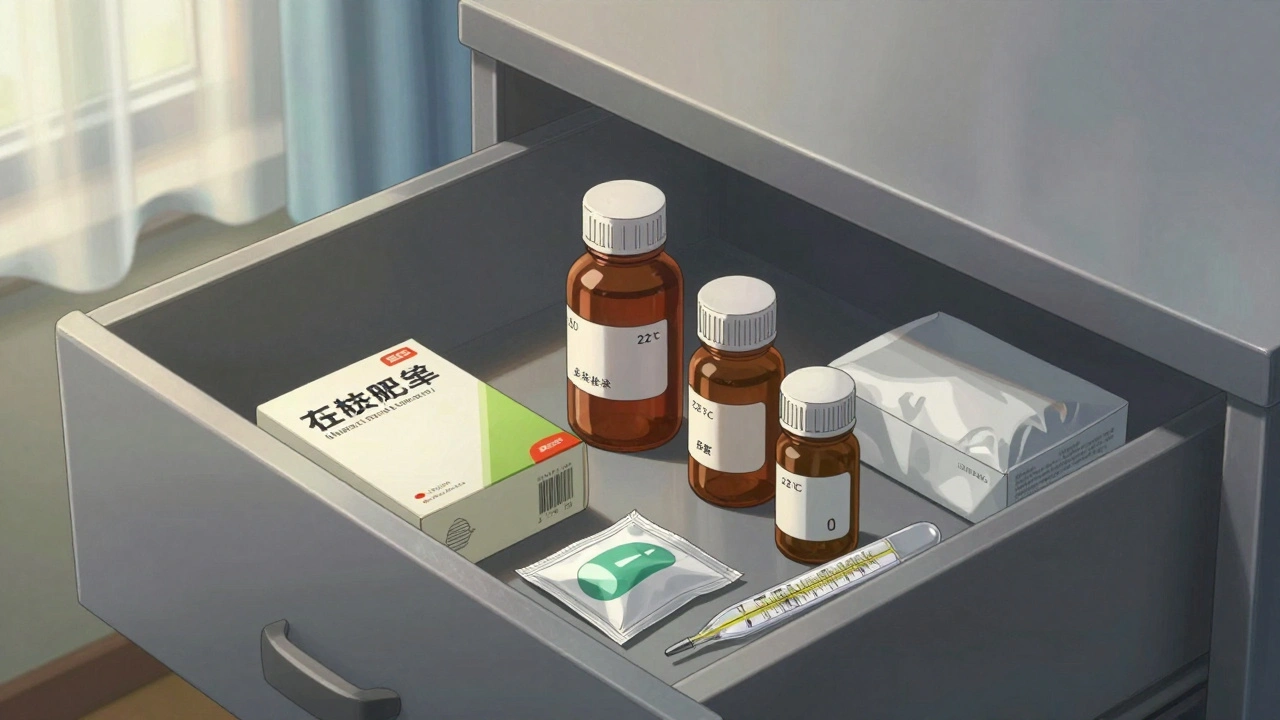
Most people throw away pills after the expiration date on the bottle. But what if those pills are still good? The truth is, medication storage matters far more than the printed date. A lot of drugs stay effective - even safe - for years past their expiration, if stored right. This isn’t speculation. It’s science backed by the U.S. government.
Why Expiration Dates Aren’t Always What They Seem
Expiration dates on medicine bottles aren’t the same as "use-by" dates on milk. They’re not a guarantee that the drug turns toxic after that day. Instead, they’re the last date the manufacturer guarantees full potency and safety under ideal storage conditions. The FDA’s Shelf-Life Extension Program (SLEP), started in 1986, tested over 3,000 lots of drugs from military stockpiles. The results? 88% of them were still safe and effective years after their labeled expiration. Some lasted up to five extra years.Take naloxone, for example. It’s used to reverse opioid overdoses. In SLEP tests, every single lot tested remained stable for 4-5 years past its expiration. Fentanyl and halothane showed the same result. Even Tamiflu, when stored properly in government stockpiles, was cleared for use up to 10 years after manufacture - five times longer than the typical label.
But here’s the catch: these results only apply when the drugs were stored correctly. If they were left in a hot car, a humid bathroom, or exposed to sunlight, all bets are off.
How to Store Medications Right
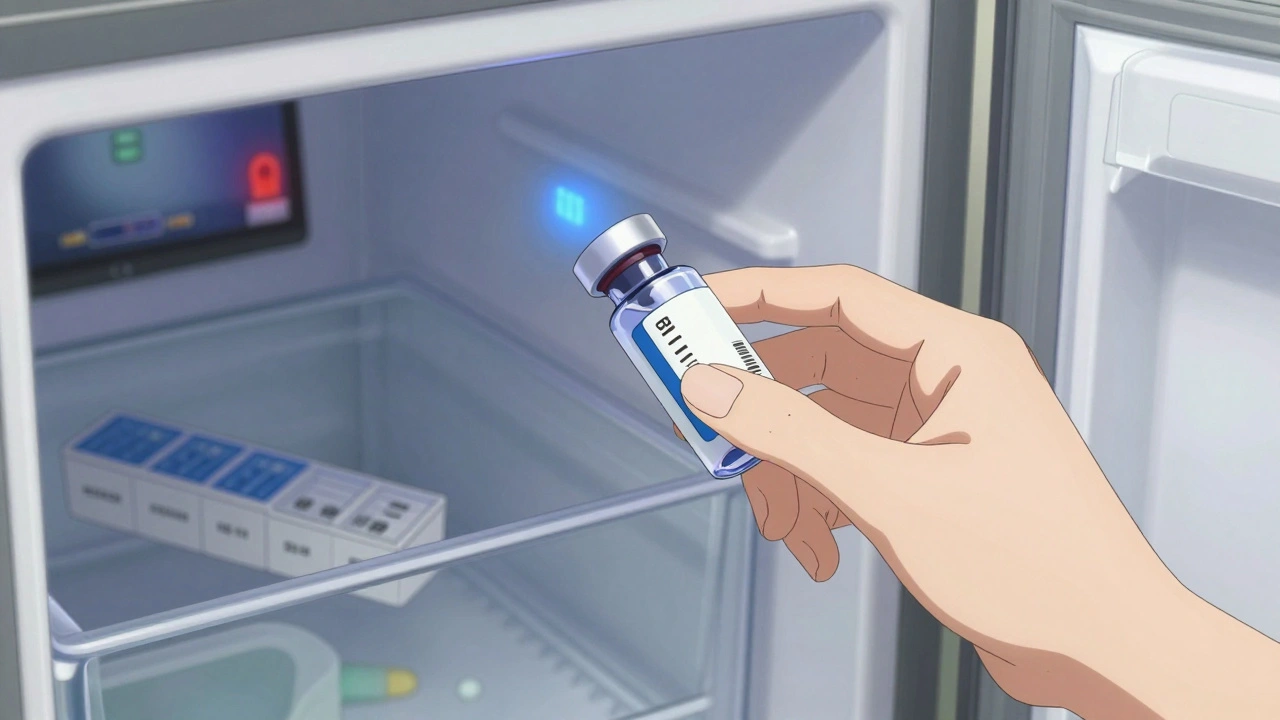
The key to extending shelf life isn’t magic. It’s control. You need to manage three things: temperature, humidity, and light.- Temperature: Most solid pills - like ibuprofen, antibiotics, or blood pressure meds - are fine at room temperature (around 20-25°C or 68-77°F). But some need refrigeration. Insulin, certain vaccines, and liquid antibiotics like amoxicillin must be kept between 2-8°C (36-46°F). Never freeze them unless the label says so.
- Humidity: Bathrooms are the worst place for pills. Steam from showers and sinks raises moisture levels. Moisture causes tablets to break down, capsules to stick together, and powders to clump. Store meds in a cool, dry closet or bedroom drawer instead.
- Light: Some medications, like nitroglycerin or certain antibiotics, break down when exposed to UV light. Keep them in their original amber bottles or inside opaque containers. Don’t transfer them to pill organizers unless you’re using them within a week.
For long-term storage, keep medications in their original packaging. That bottle or blister pack isn’t just for branding - it’s designed to protect the drug. HDPE plastic bottles with child-resistant caps, or aluminum-backed blister packs, help block air and moisture. If you’ve opened a bottle and it’s been sitting out, consider putting it in a sealed plastic container with a desiccant pack (those little silica gel packets you find in new shoes or electronics).
What Doesn’t Work - and What’s Dangerous
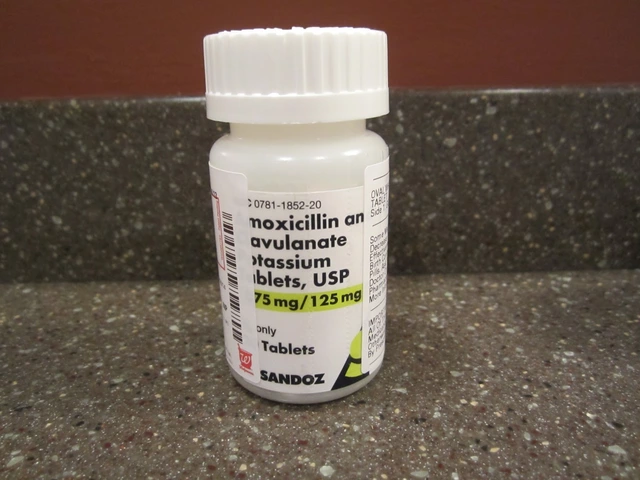
Not all drugs can be saved. Some degrade into harmful substances. Tetracycline antibiotics, for example, can break down into compounds that damage the kidneys. Even if it looks fine, don’t use expired tetracycline. The same goes for nitroglycerin - if it’s past its date, it may not work in a heart attack. Liquid medications, eye drops, and reconstituted antibiotics (like amoxicillin powder mixed with water) are especially risky. They’re prone to bacterial growth and lose potency quickly.Refrigerated drugs are more stable than room-temperature ones - but only if they stay cold. A 2021 WHO report found that 23% of medication failures happened during the "last mile" - the final leg of delivery from warehouse to pharmacy or home. If your insulin was left in a hot mailbox for an hour, it’s probably ruined. Same with vaccines. Once they warm up, you can’t just cool them back down and expect them to work.
And no, putting pills in the freezer doesn’t help. Freezing can crack tablets, separate liquids, or cause moisture to form inside the container when you take them out. It’s not a better storage method - it’s a risk.

What the Experts Say
Dr. John Jenkins, former head of the FDA’s drug evaluation office, said: "The vast majority of properly stored medications remain effective well beyond their expiration dates." That’s not an opinion. It’s based on data from the SLEP program. But not everyone agrees on extending shelf life for personal use. Dr. Lee Cantrell from UCSF warns: "While many solid oral dosage forms maintain stability, liquid formulations, reconstituted products, and certain antibiotics like tetracycline can degrade into potentially toxic compounds." So, if you’re thinking about keeping an old antibiotic for a future infection - don’t. Use it only if it’s within its date, stored properly, and you’re sure of its condition.The Joint Commission requires pharmacies and clinics to follow the manufacturer’s storage instructions exactly. That’s not just bureaucracy - it’s the only way to know what’s safe. If the label says "refrigerate," don’t ignore it. If it says "protect from light," keep it in the dark.
What’s Changing in the Industry
The pharmaceutical world is shifting. Companies are moving away from fixed expiration dates. Instead, they’re using "continuous stability monitoring" - sensors that track temperature and humidity in real time. Some smart packaging now has time-temperature indicators that change color if the drug was exposed to heat. Early trials show these can extend usable life by 15-25% compared to printed dates.In 2024, the FDA extended the shelf life of TPOXX (tecovirimat) injection from 48 to 60 months for specific lots in the national stockpile. That’s not a one-off. It’s part of a trend. The Strategic National Stockpile now manages over 3,000 drugs with lot-specific expiration dates - not blanket labels. This saves billions. Since 1986, SLEP has saved more than $2.1 billion by avoiding unnecessary drug replacements.
But this isn’t just for governments. As packaging tech improves, it’s trickling down to pharmacies. More manufacturers are using moisture-proof blister packs and oxygen-barrier containers. The global market for advanced pharmaceutical packaging is projected to hit $155 billion by 2027. That means better protection for you, too.
What You Can Do Today
You don’t need a lab or a government contract to store your meds safely. Here’s a simple checklist:- Check the label. Follow the storage instructions exactly.
- Keep pills away from heat, moisture, and sunlight. A bedroom drawer is better than a bathroom cabinet.
- Don’t transfer pills to daily pill boxes unless you’re using them within 7 days.
- Never use expired insulin, eye drops, liquid antibiotics, or tetracycline.
- If you’re unsure about an old medication, don’t guess. Take it to a pharmacy for disposal.
If you have a chronic condition and rely on a daily medication, consider buying a small extra supply - but only if you can store it right. Keep it in its original bottle, in a cool, dry place, and check it once a year. Look for discoloration, crumbling, strange smells, or clumping. If anything looks off, toss it.
What About Emergency Situations?
During disasters - hurricanes, wildfires, pandemics - access to medicine can be cut off. The FDA has approved emergency extensions for stockpiled drugs like doxycycline and Tamiflu when shortages occur. But these are rare, controlled decisions made by public health officials. Don’t assume you can use a 10-year-old pill because "it’s an emergency." If you’re in a crisis and have no other option, a properly stored, solid oral medication that’s only a year or two past its date is likely still safe. But don’t take risks with injectables, liquids, or critical drugs like heart medications.The goal isn’t to hoard old pills. It’s to reduce waste and use what you have wisely. If you’re storing meds for emergencies, rotate them every 2-3 years. Use the oldest first. Keep a list of what you have and when it expires. That way, you’re prepared - not panicked.
Can I still use medication after its expiration date?
Yes, many solid oral medications like pain relievers, antihistamines, and blood pressure pills remain effective and safe for years after expiration - if stored properly in a cool, dry, dark place. But never use expired insulin, eye drops, liquid antibiotics, or tetracycline. Always check for changes in color, texture, or smell.
Where is the best place to store pills at home?
A cool, dry, dark place like a bedroom drawer or closet is ideal. Avoid the bathroom, kitchen, or car. Humidity and heat are the biggest enemies of medication stability. If your medicine requires refrigeration, keep it in the main part of the fridge - not the door, where temperatures fluctuate.
Do refrigerated medicines last longer?
Generally, yes. Medications that need refrigeration - like insulin, certain vaccines, and liquid antibiotics - are more stable when kept cold. But only if they stay cold. If they’re left out for hours or frozen, they can be ruined. Always follow the manufacturer’s temperature instructions exactly.
Is it safe to store pills in a pill organizer for weeks?
Only if you’re using them within 7 days. Pill organizers expose medication to air and moisture, which can degrade potency. For long-term storage, keep pills in their original containers. Use organizers only for daily or weekly doses.
What should I do with expired medications?
Don’t flush them or throw them in the trash. Take them to a pharmacy with a drug take-back program, or use a DEA-authorized collection site. Many cities have drop boxes at police stations or community centers. If no option is available, mix pills with coffee grounds or cat litter in a sealed bag before throwing them away - this discourages misuse.

val kendra
December 4, 2025 AT 23:57 PMI kept my ibuprofen in a drawer for 7 years and it still worked like a charm during that back flare-up last winter. No weird smell, no crumbling, just pure relief. Why waste money replacing what’s still good?
Storage matters way more than some printed date.
Elizabeth Crutchfield
December 5, 2025 AT 00:57 AMomg i just threw out my albuterol cuz the date was past but now i feel so dumb 😅 i kept it in my bathroom and it was prob ruined anyway lol
Ben Choy
December 6, 2025 AT 13:17 PMSame. I store all my meds in a sealed plastic tub with those silica packs from new shoes. Been doing it for years. No issues. My grandma’s blood pressure pills from 2018? Still fine. Just keep em dry and dark.
And please stop putting meds in the bathroom. That’s just asking for trouble.
Emmanuel Peter
December 7, 2025 AT 23:33 PMSo you’re saying it’s fine to take expired antibiotics? That’s how you get superbugs. You’re not a scientist, you’re a hoarder. The FDA doesn’t say ‘all pills are fine’ - they say 88% of military-grade stockpiles under controlled conditions. You think your drawer is a lab? Wake up.
Ashley Elliott
December 8, 2025 AT 06:02 AMThank you for this. Seriously. I’ve been telling people for years: bathroom = death zone for pills. I keep mine in a locked drawer with a little silica packet, and I label everything with the date I opened it.
Also - if it smells funny, looks weird, or tastes off? Toss it. No exceptions. Even if it’s ‘only’ a year past.
And please, don’t use pill organizers for more than a week. Air exposure is real.
Chad Handy
December 8, 2025 AT 22:34 PMLook, I get it. You want to save money. But you’re playing Russian roulette with your health. Tetracycline turns into poison. Nitroglycerin fails and you die. Insulin goes bad and you go into DKA. This isn’t ‘maybe it’s fine.’ This is ‘maybe you’re dead.’
And don’t even get me started on people hoarding Tamiflu like it’s gold. You think the government stockpile is your personal pharmacy? No. You’re not a first responder. You’re just someone who didn’t get the memo.
And yes, freezing pills? That’s worse than leaving them in the sun. You’re not preserving them - you’re destroying them with ice crystals. It’s science, not magic.
Augusta Barlow
December 10, 2025 AT 17:10 PMDid you know the FDA and Big Pharma are in cahoots to make you buy new pills? The SLEP program? A distraction. They don’t want you to know how long drugs last - it cuts into profits. Look at the numbers: 88% still effective? That’s not science - that’s a cover-up.
And why do they use amber bottles? Because they’re hiding something. Why do they print dates at all? To scare you. To keep you buying. They don’t care if you live or die - they care about quarterly earnings.
Also, the silica packets? Probably laced with tracking chips. I read it on a forum. You’re being monitored through your medicine cabinet.
Joe Lam
December 11, 2025 AT 12:48 PMWow. This post reads like a pamphlet from a 1998 pharmacy convention. You’re not a pharmacist. You’re not a chemist. You’re not even a grad student. You’re just someone who Googled ‘medication stability’ and thought you were Einstein.
And you’re telling people to use 10-year-old pills? That’s not wisdom - it’s negligence. You think your grandma’s drawer is a controlled environment? It’s a humidity chamber with cat hair and dust bunnies.
And don’t even get me started on ‘rotating stock.’ That’s not preparedness - that’s amateur hour. Real preparedness means having a prescription on file, not hoarding expired junk.
Scott van Haastrecht
December 12, 2025 AT 06:05 AMOh wow. So now we’re supposed to trust government stockpiles over manufacturers? The same people who let OxyContin flood the country? The same FDA that approved Vioxx? You’re seriously asking me to believe their data?
And let’s not forget - they also said asbestos was safe. And lead paint. And thalidomide.
Don’t be a sheep. Don’t take expired meds. Don’t be a pawn in their profit game.
Also - your ‘cool, dry drawer’? My cousin’s kid took expired amoxicillin and ended up in the ER. It’s not a myth. It’s a lawsuit waiting to happen.
Chase Brittingham
December 13, 2025 AT 19:45 PMHey, I just wanted to say thank you for writing this. I’ve been storing my insulin in the fridge door for years and I had no idea that was bad. Just moved it to the back shelf today. Also got some silica packets from Amazon - cheap as hell.
And yeah, I used to toss meds the second they expired. Now I check for discoloration and smell. If it looks and smells normal, I’m not gonna panic.
But I still won’t use eye drops or liquid antibiotics past date. That part makes total sense.
Appreciate the clarity.
Bill Wolfe
December 14, 2025 AT 10:54 AMLet me be the adult in the room. You’re romanticizing expired meds like they’re heirloom tomatoes. They’re not. They’re chemical compounds with half-lives. You’re not a survivalist - you’re a liability.
And don’t even think about using expired epinephrine in an emergency. That’s not bravery. That’s murder with a side of ignorance.
Also, the ‘silica packets’ idea? Cute. But they’re not FDA-approved. You’re basically doing home chemistry without a license. Congratulations, you’re now a rogue pharmacist.
And for the love of God, stop using pill organizers. They’re not ‘convenient.’ They’re degradation accelerators. You’re not organizing your meds - you’re poisoning them.
Ollie Newland
December 15, 2025 AT 21:47 PMInteresting breakdown. The SLEP data is solid, but it’s worth noting that stability studies are conducted under ISO 11607-compliant conditions - controlled RH, temp, and inert atmospheres. Your bedroom drawer? Not even close.
Also, HDPE bottles do offer excellent moisture barrier properties - up to 0.01 g/m²/day permeation rate. But once opened, oxygen ingress becomes a factor. That’s why amber bottles with desiccants are optimal.
And yes - the 2024 TPOXX extension? That’s part of the FDA’s new ‘real-time stability monitoring’ framework. Smart packaging with TTI (time-temperature indicators) is now mandatory for certain biologics in the EU. US is catching up.
Bottom line: context matters. Solid oral dosage forms? Maybe. Biologics? No.