FibroScan: What It Is, How It Works, and What It Reveals About Liver Health
When your doctor suspects liver damage, they might recommend a FibroScan, a non-invasive medical device that measures liver stiffness to detect scarring and fat buildup. Also known as transient elastography, it gives real-time results without a needle, making it a safer alternative to traditional liver biopsies. Unlike blood tests that only show liver enzyme levels, FibroScan actually sees how stiff your liver is—because scar tissue is harder than healthy tissue.
It’s not just for people with heavy drinking habits. If you have fatty liver disease, hepatitis B or C, diabetes, or obesity, your liver could be slowly scarring without you knowing. FibroScan catches this early. The test takes under 10 minutes. You lie on your back, a probe is placed on your skin near the liver, and it sends out gentle vibrations. The speed of those vibrations tells the machine how stiff your liver is. Higher stiffness means more fibrosis. Results are measured in kilopascals (kPa), and doctors use those numbers to stage liver damage from F0 (no scarring) to F4 (advanced cirrhosis).
It’s also used to track progress. If you’re losing weight, cutting alcohol, or taking medication for hepatitis, your doctor might order repeat FibroScans to see if your liver is healing. Many clinics now use it as a first-line tool because it’s fast, accurate, and doesn’t require fasting or recovery time. And unlike biopsies, it can be done every few months without risk.
What FibroScan doesn’t tell you is the exact cause of the damage. That’s where your blood work, medical history, and sometimes imaging come in. But it’s the clearest picture you can get of liver health without surgery. If you’ve been told your liver enzymes are high, or you’re worried about long-term effects of medications, alcohol, or metabolic syndrome, FibroScan gives you answers without the pain.
Below, you’ll find real-world guides on liver-related conditions, medication safety, and how to protect your liver long-term. From understanding how statins affect liver function to managing fatty liver with diet, these posts help you connect the dots between your test results and your daily choices. You’re not just reading about a test—you’re learning how to take control of your liver health.
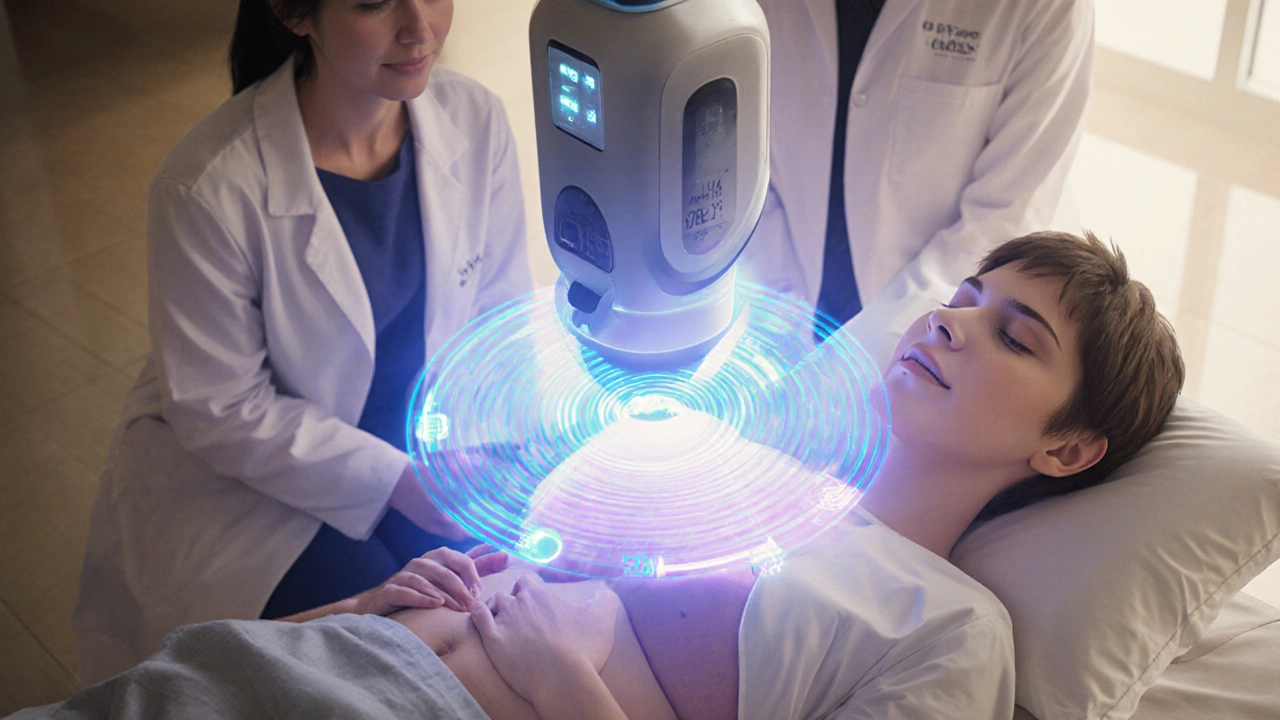
Noninvasive Liver Fibrosis Tests: FibroScan and Serum Scores Explained
FibroScan and serum scores like FIB-4 offer accurate, noninvasive ways to detect liver fibrosis without biopsy. Learn how they work, their strengths, limitations, and how doctors use them together to guide care.

Recent Posts

Steroid-Induced Psychosis: How to Recognize and Treat It in an Emergency
November 22, 2025
How Type 2 Diabetes Undermines Wound Healing and Skin Health
September 29, 2025